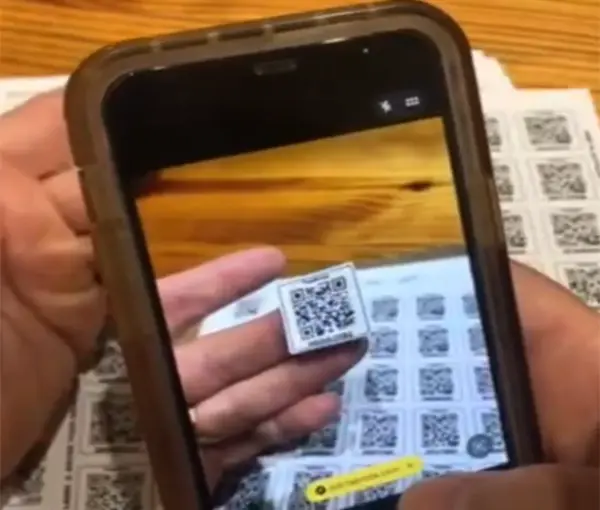
Activate the Entire Pack Once
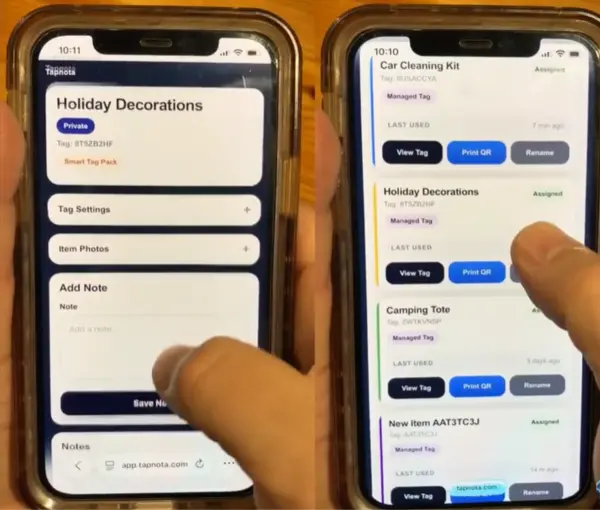
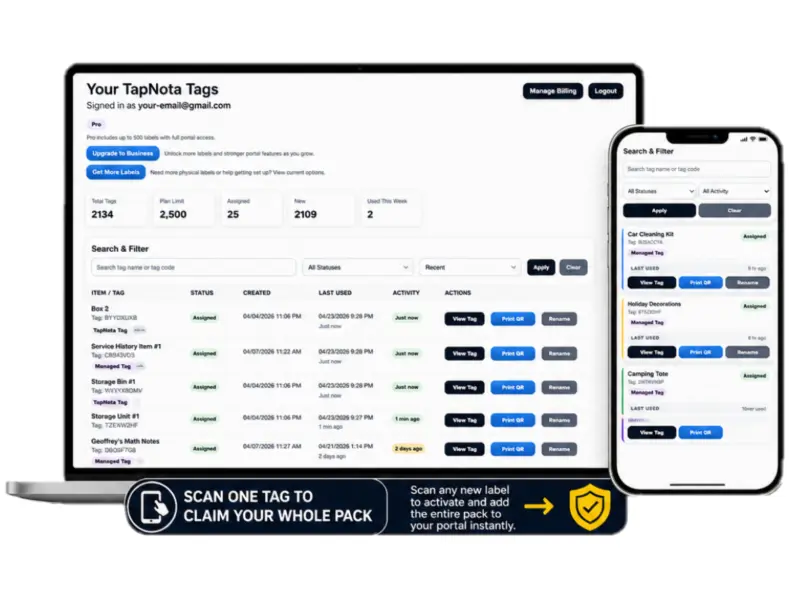
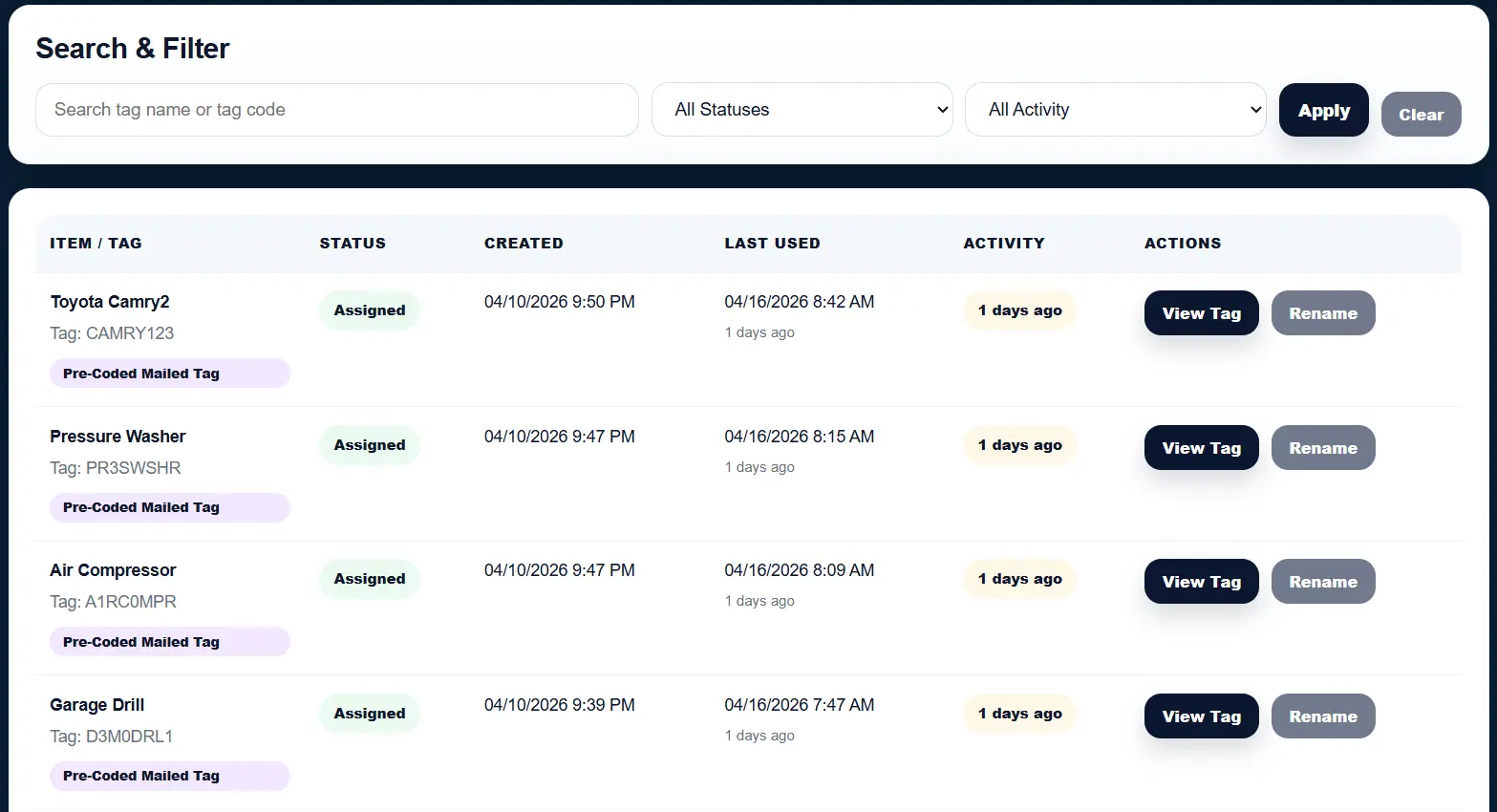
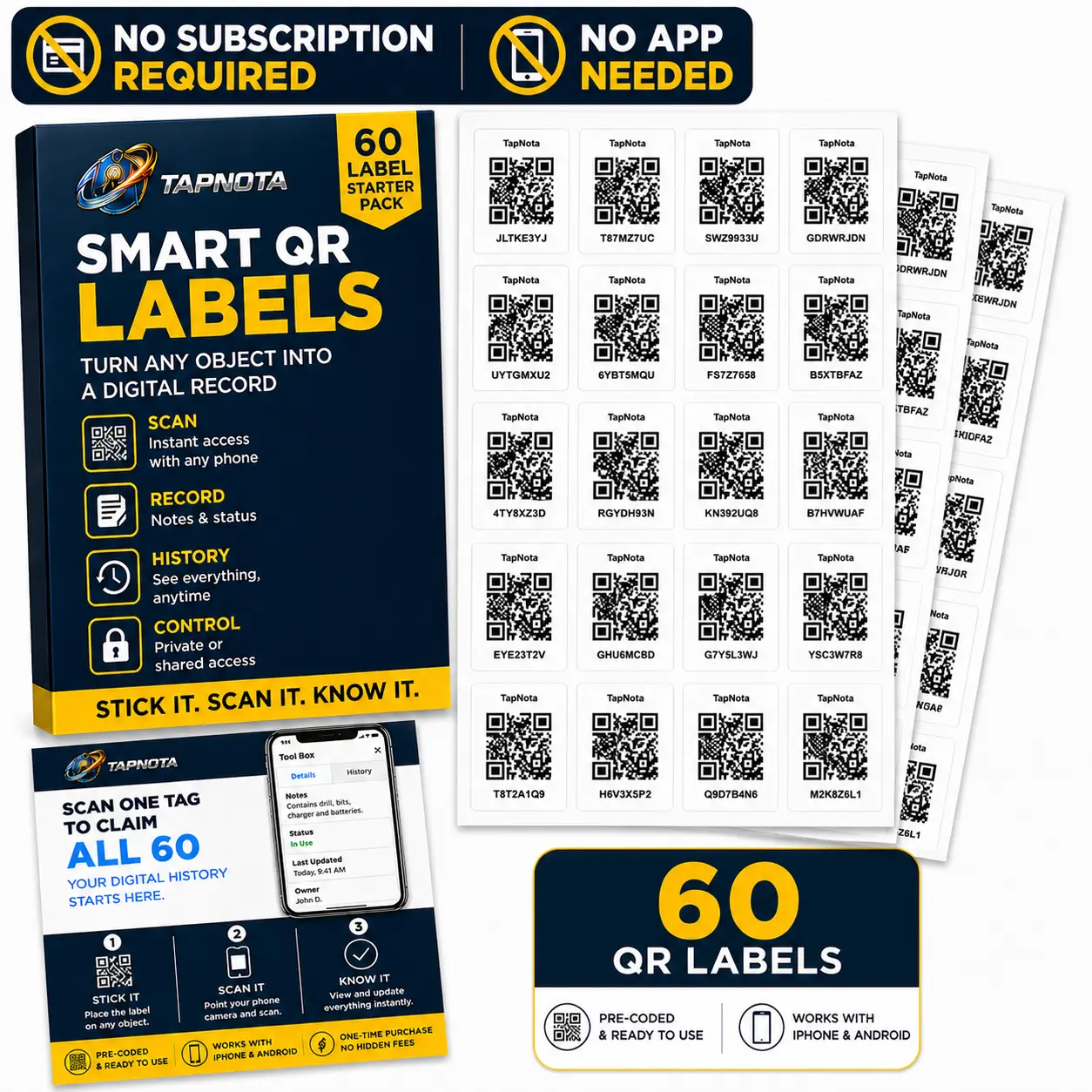
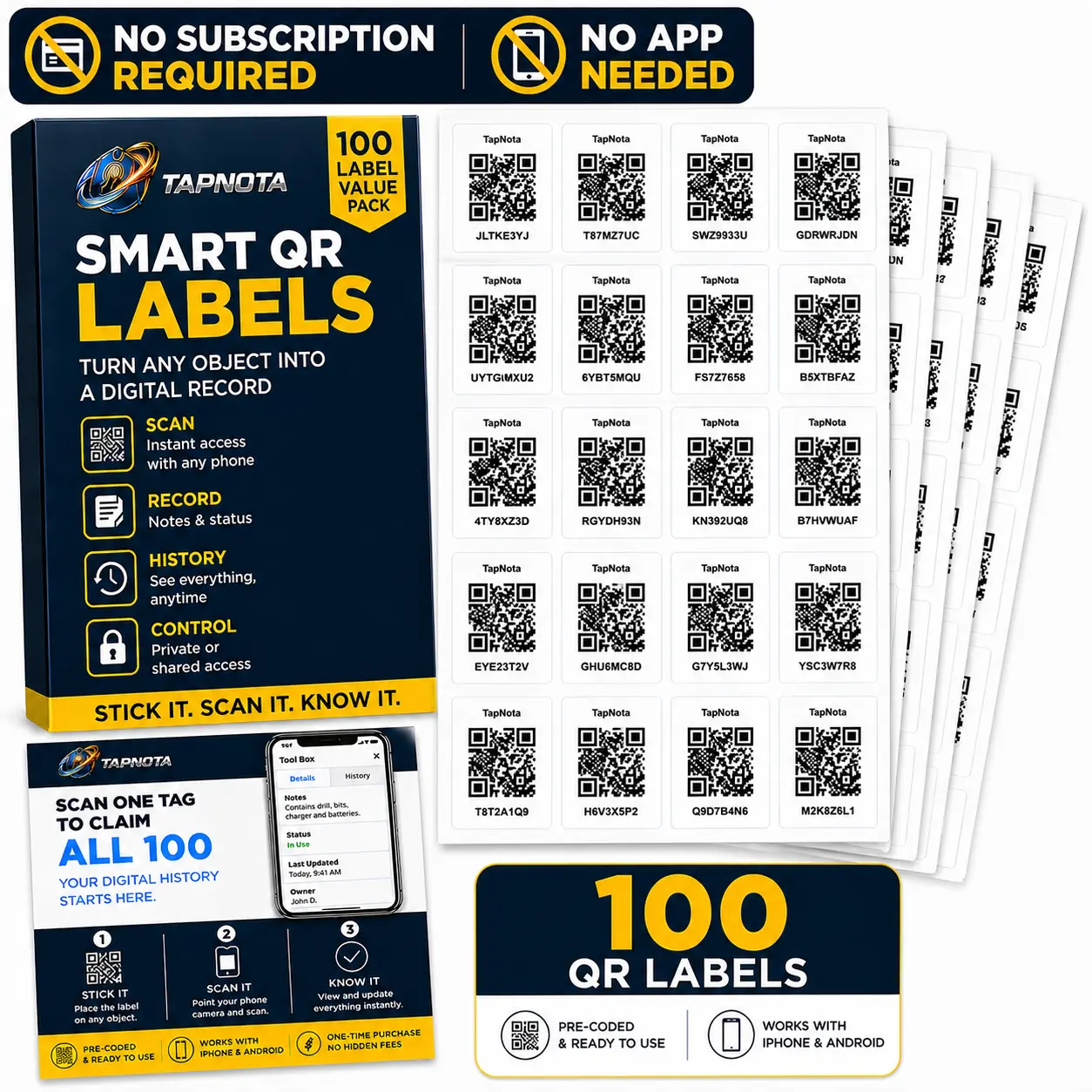
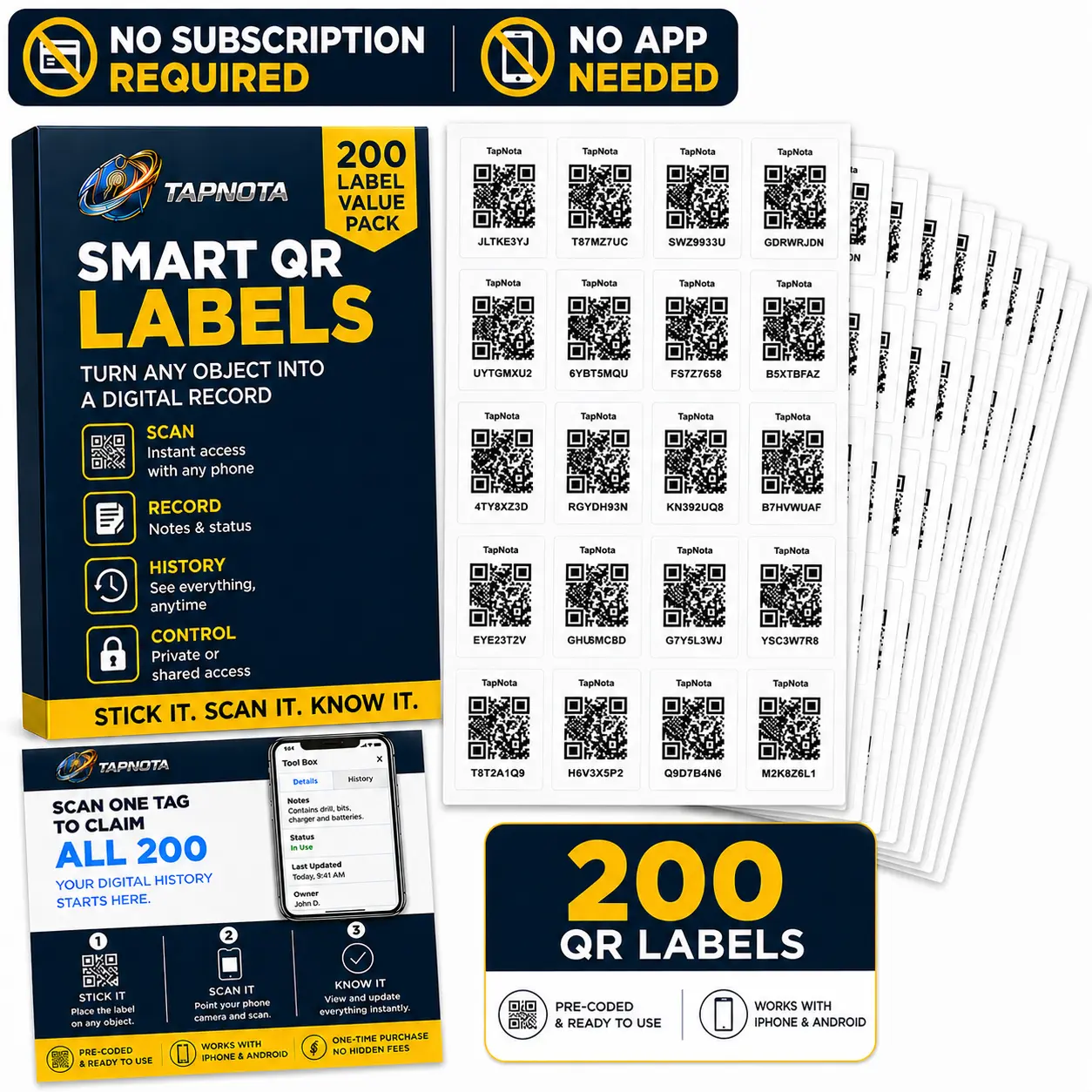
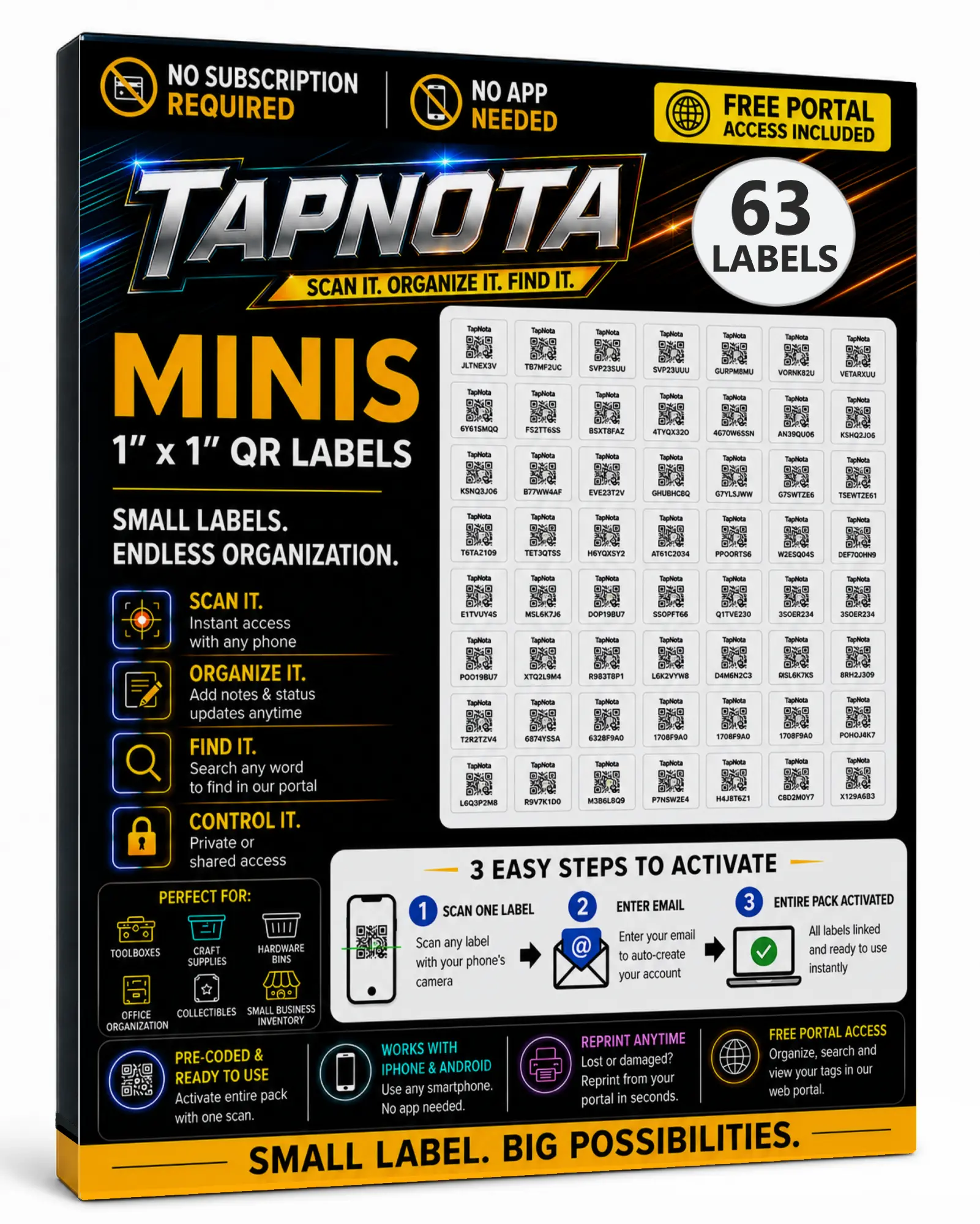
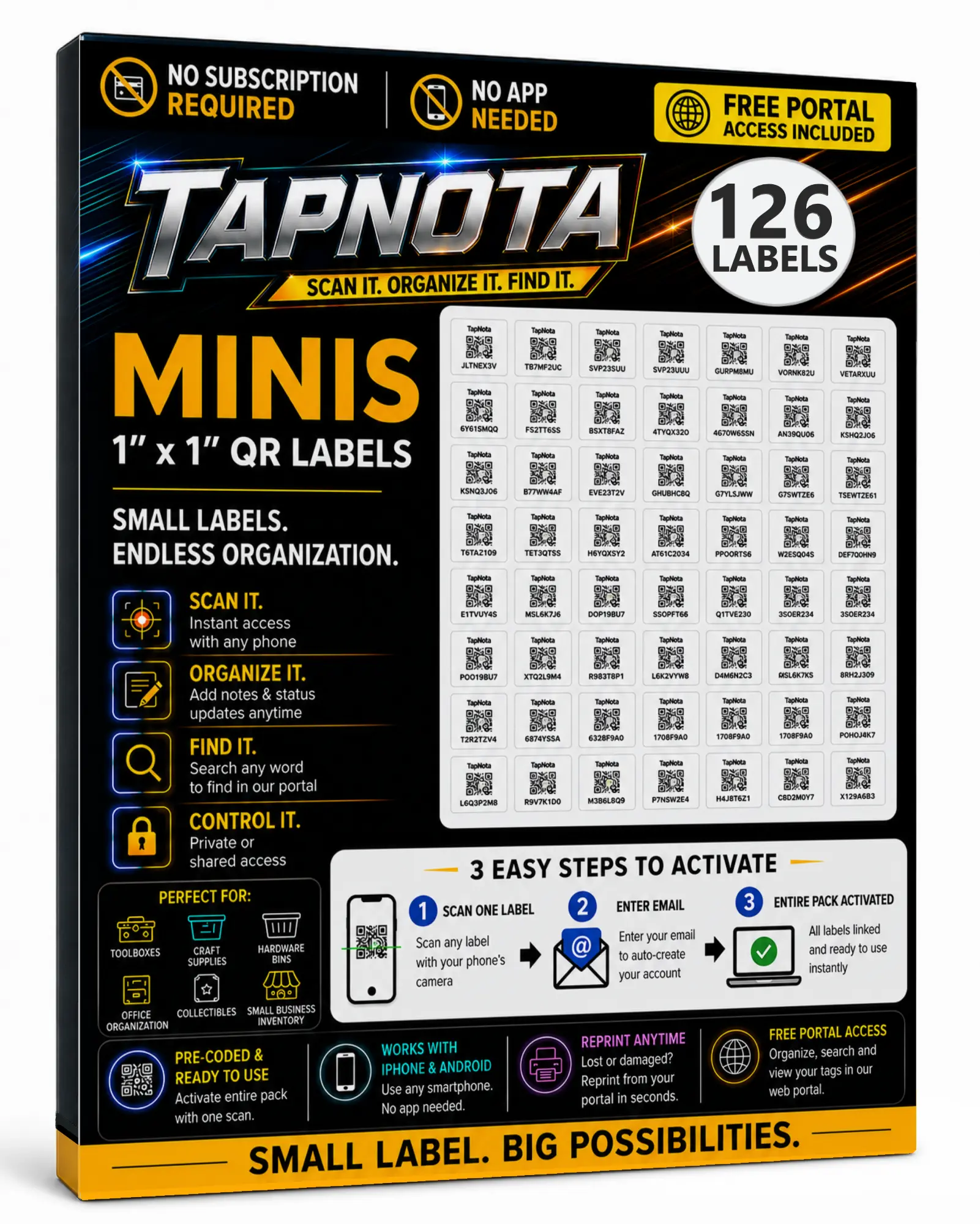
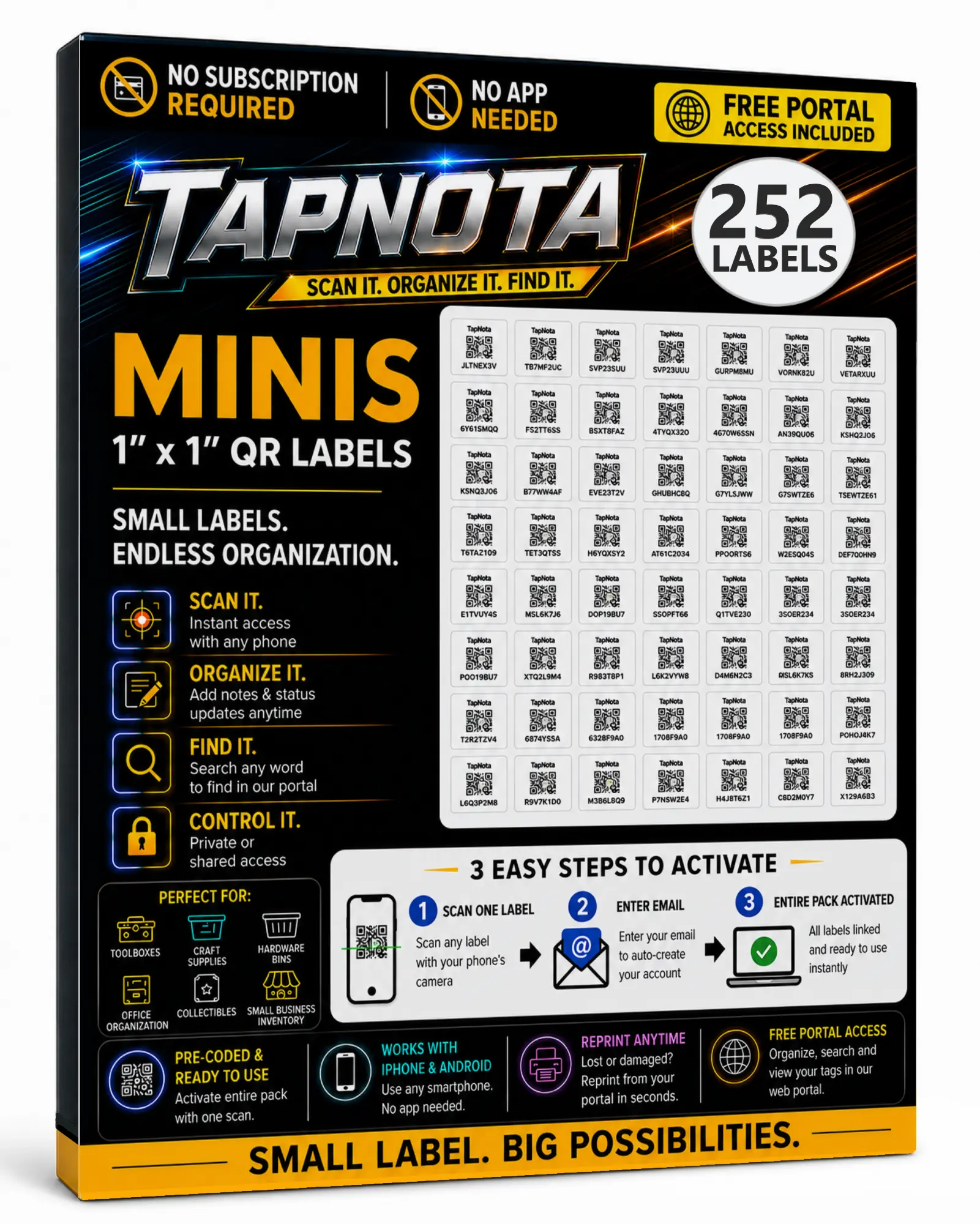
Scan any label in the purchased pack, enter and verify your email, and TapNota connects the whole pack to your account.
You do not activate every label separately.

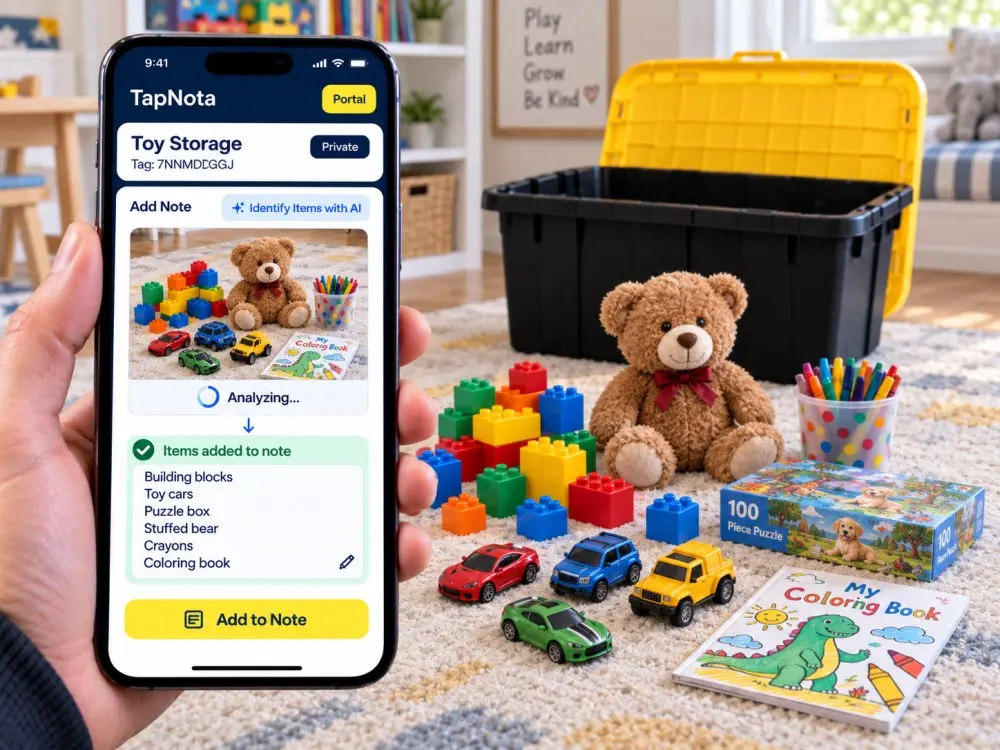
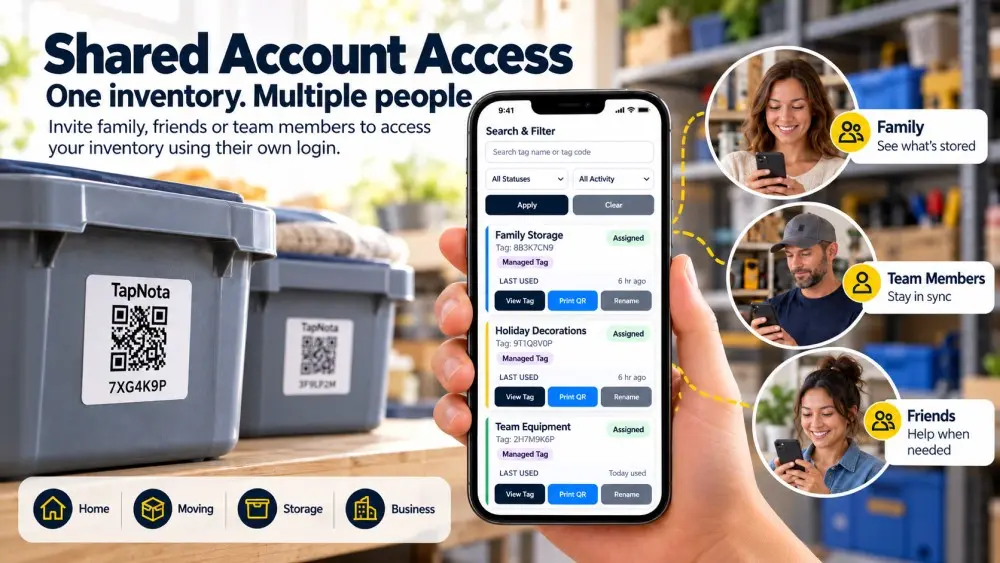
Organize plastic storage bins by category, room, season, and frequency of use. TapNota QR labels connect each bin to a searchable digital page with detailed contents, photos, locations, notes, and history.
Plastic Storage Bin Organization Image
Add one lifestyle image showing neatly stacked plastic storage bins with clear labels and a phone displaying a TapNota bin page.
A good storage system starts with containers that stack safely, fit shelves correctly, and protect the contents without becoming too heavy.
Use smaller bins for heavy items and larger bins for lightweight, bulky belongings.
Choose containers with flat lids and compatible footprints for safer, more stable stacks.
Use clear bins for quick visual checks and opaque bins when you want a cleaner appearance or light protection.
Build a system that stays useful instead of becoming another stack of mystery containers.
Group similar items, remove trash and duplicates, and separate items that belong in another room.
Use practical categories such as holiday décor, camping gear, children’s clothes, tools, or craft supplies.
Match bin size, lid style, weight capacity, and transparency to the contents.
Decide which room, shelf, rack, cabinet, closet, attic, or garage zone will hold the bin.
Use a short category name on the outside and a TapNota QR label for detailed contents and photos.
Keep the same label while updating the digital record as items move in or out.
Categories should be specific enough to be useful but broad enough that you do not end up with dozens of nearly empty bins.
Separate ornaments, lights, table décor, wreaths, and seasonal accessories.
Organize by person, size, season, or clothing type.
Track cookware, lights, sleeping gear, repair items, and accessories.
Organize toys, school projects, clothing, books, and keepsakes.
Separate fasteners, hand tools, accessories, parts, and repair supplies.
Group paper, fabric, paint, tools, kits, and unfinished projects.
Use smaller bins and keep important papers protected and easy to identify.
Track extra linens, cleaning supplies, pantry backups, and seasonal household items.
The best shelf location depends on how often a bin is used, how heavy it is, and how safely it can be lifted.
Different bin styles solve different organization problems.
| Bin Type | Best For | Watch For | Organization Tip |
|---|---|---|---|
| Clear plastic bins | Frequently checked household and craft items | Visual clutter and light exposure | Use a short label even when contents are visible |
| Opaque plastic bins | Clean-looking shelves and light-sensitive contents | Contents cannot be seen | Use detailed QR records and outward-facing labels |
| Small latching bins | Hardware, craft supplies, cables, and small parts | Too many tiny categories can become confusing | Group by project or activity |
| Large tote bins | Bulky seasonal décor, bedding, and lightweight gear | Easy to overload and difficult to lift | Avoid filling large bins with dense, heavy items |
| Weather-resistant bins | Garages, sheds, and moisture-prone areas | Not all bins are fully waterproof | Keep bins elevated and protect sensitive contents |
A short outside label shows the category. A TapNota QR label connects the bin to a full contents list, photos, notes, location, and history.
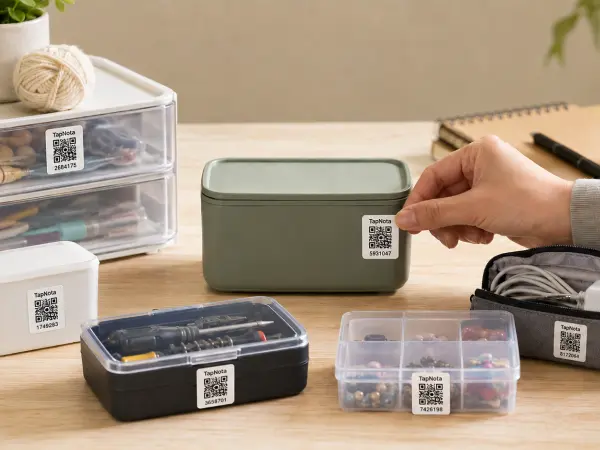
TapNota Product Image
Add one product image showing TapNota label packs with labels applied to plastic storage bins.
Use original 2-inch TapNota labels on standard totes, shelves, and larger containers. TapNota Minis work well on small parts bins, drawers, craft containers, and compact storage boxes.
Explore related TapNota pages for storage labels, garage organization, home inventory, and practical bin systems.
Sort by category, label consistently, record locations, and use TapNota QR pages to find stored items faster.
Need more labels? Buy additional TapNota pre-coded packs on Amazon. Scan one label to activate your entire pack instantly.