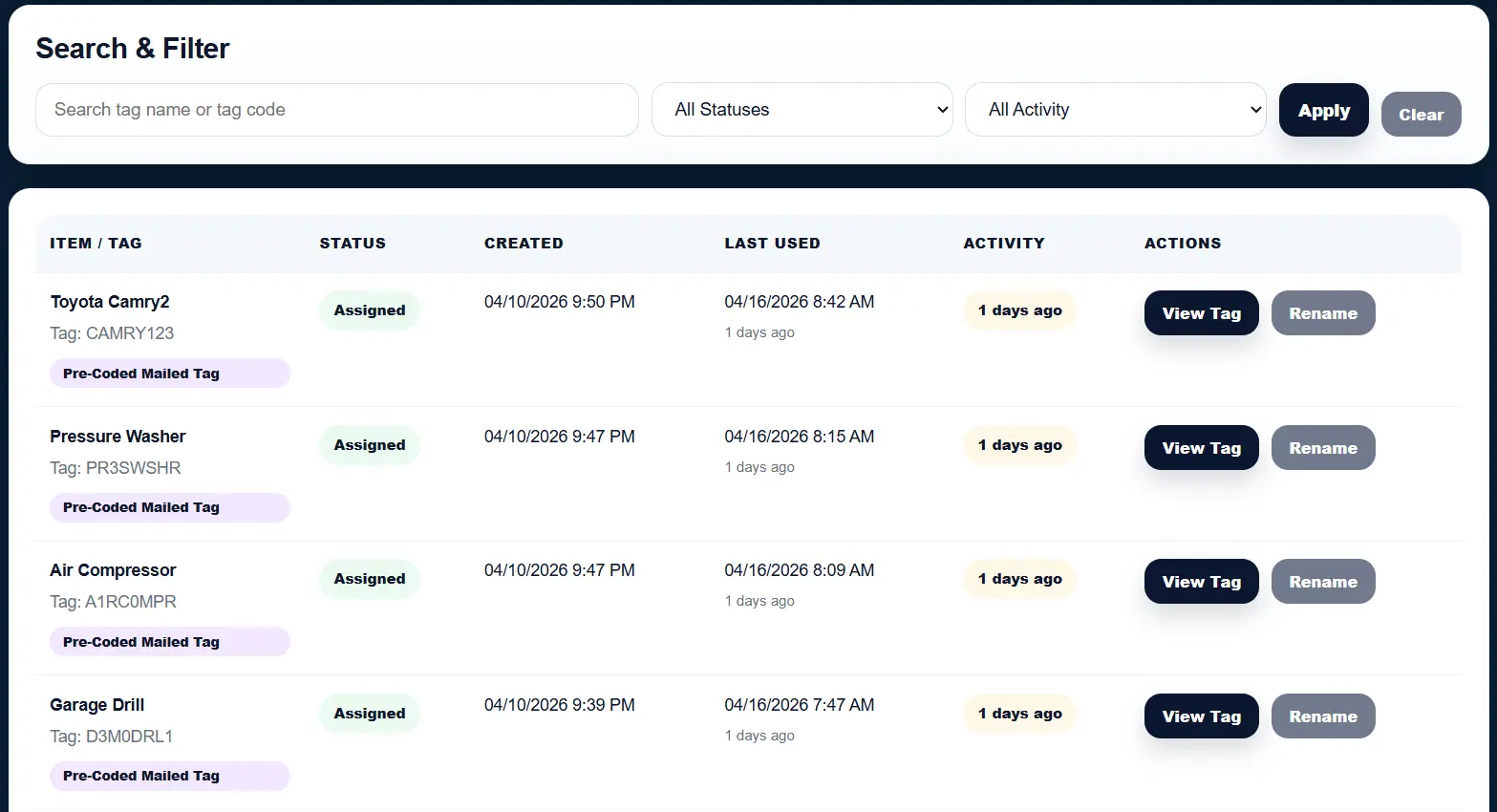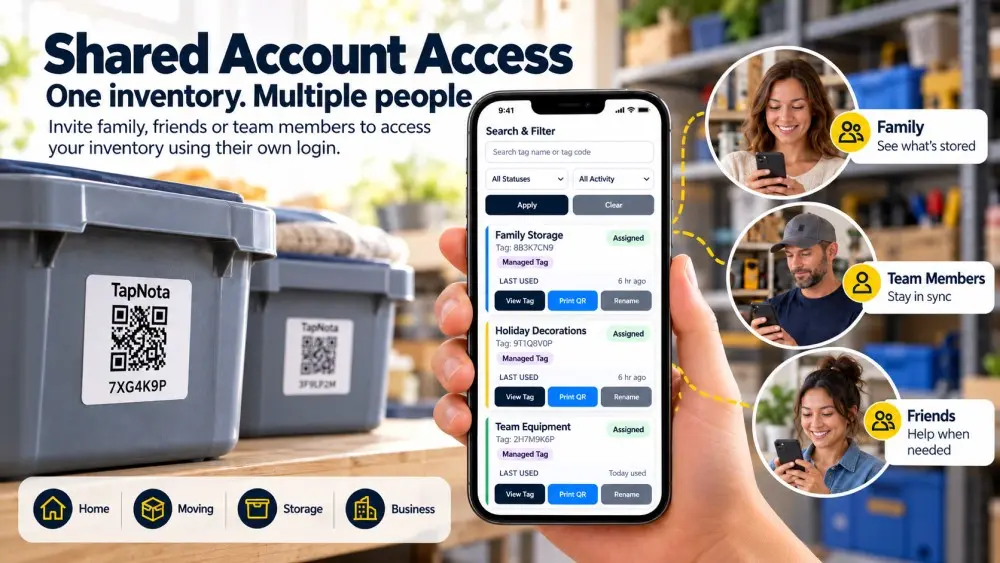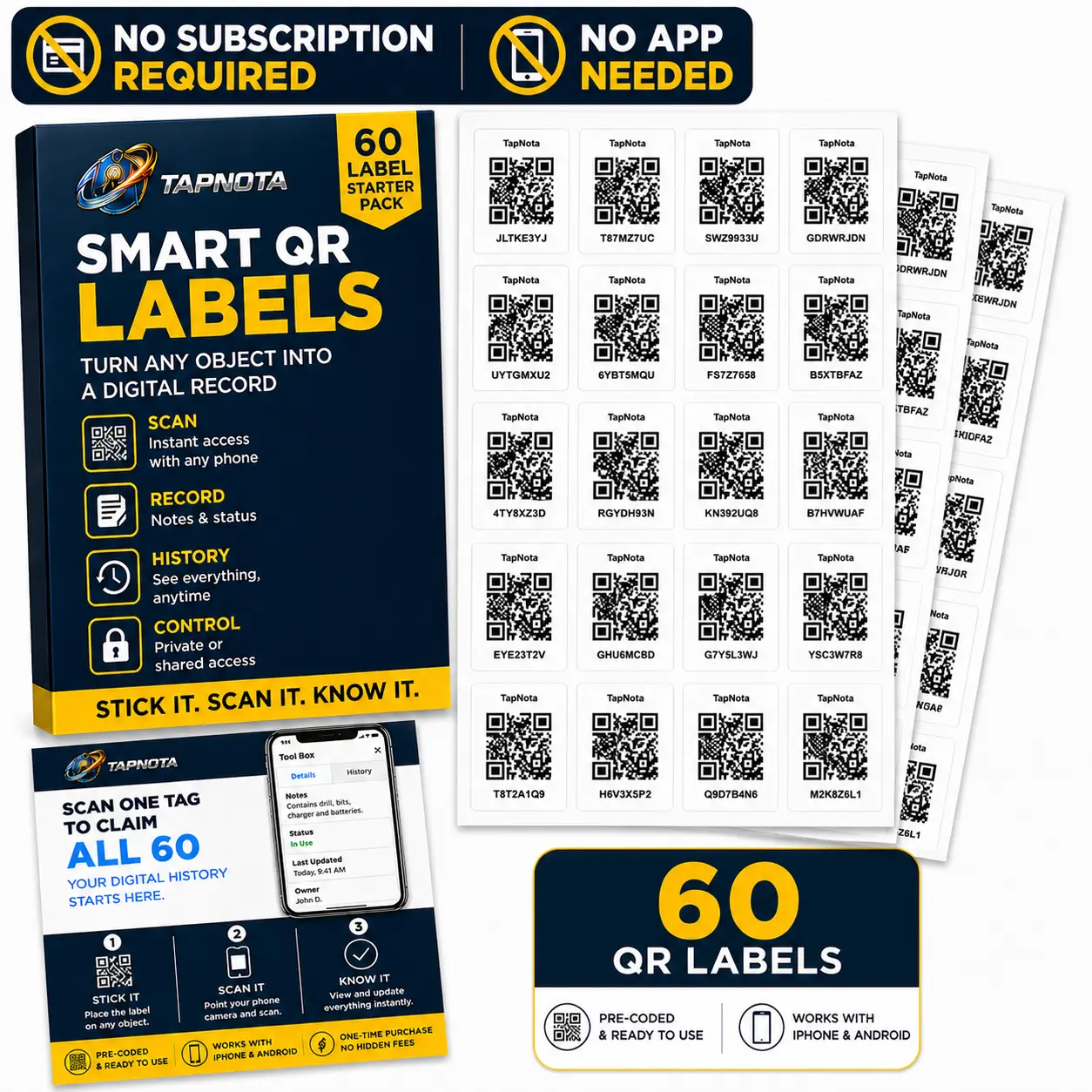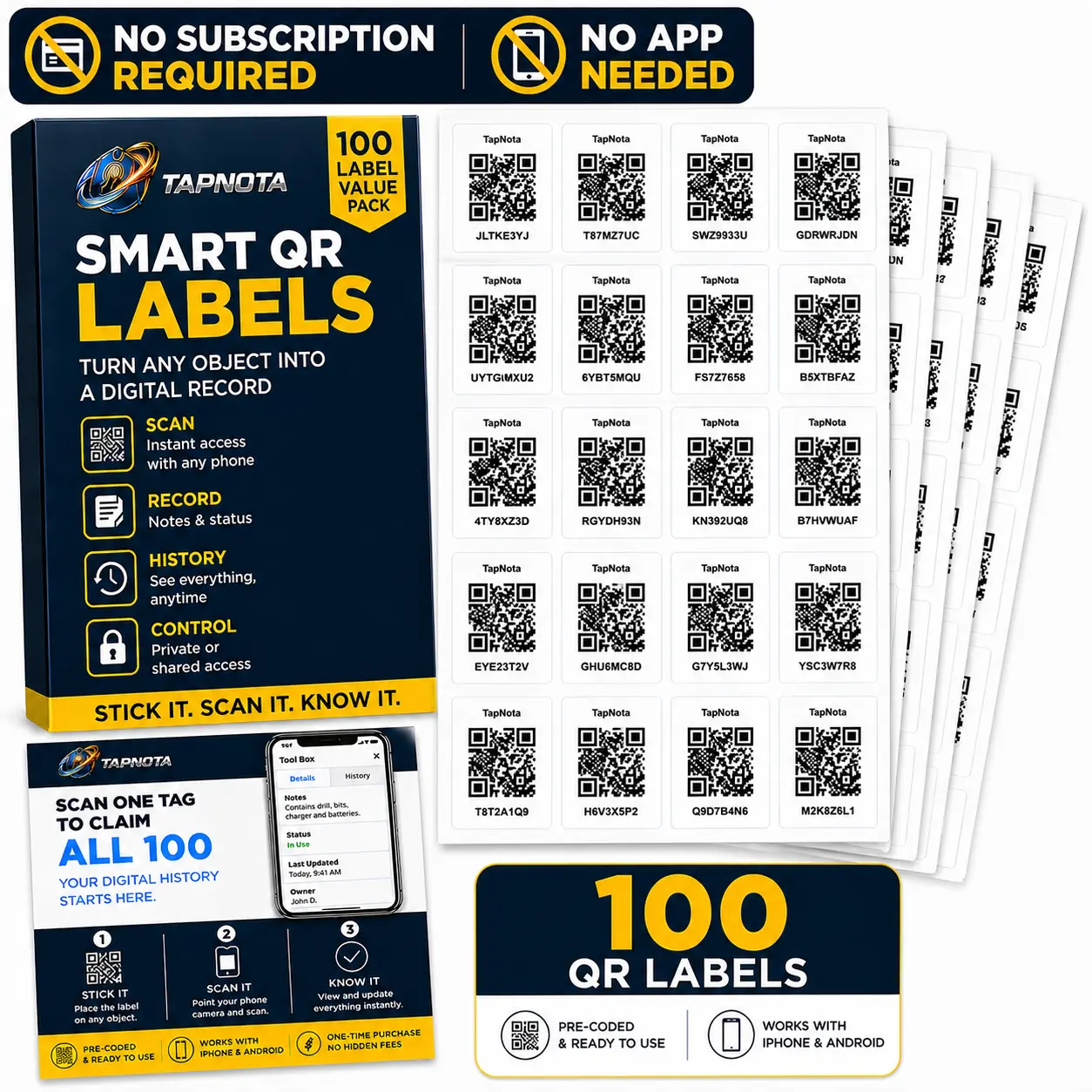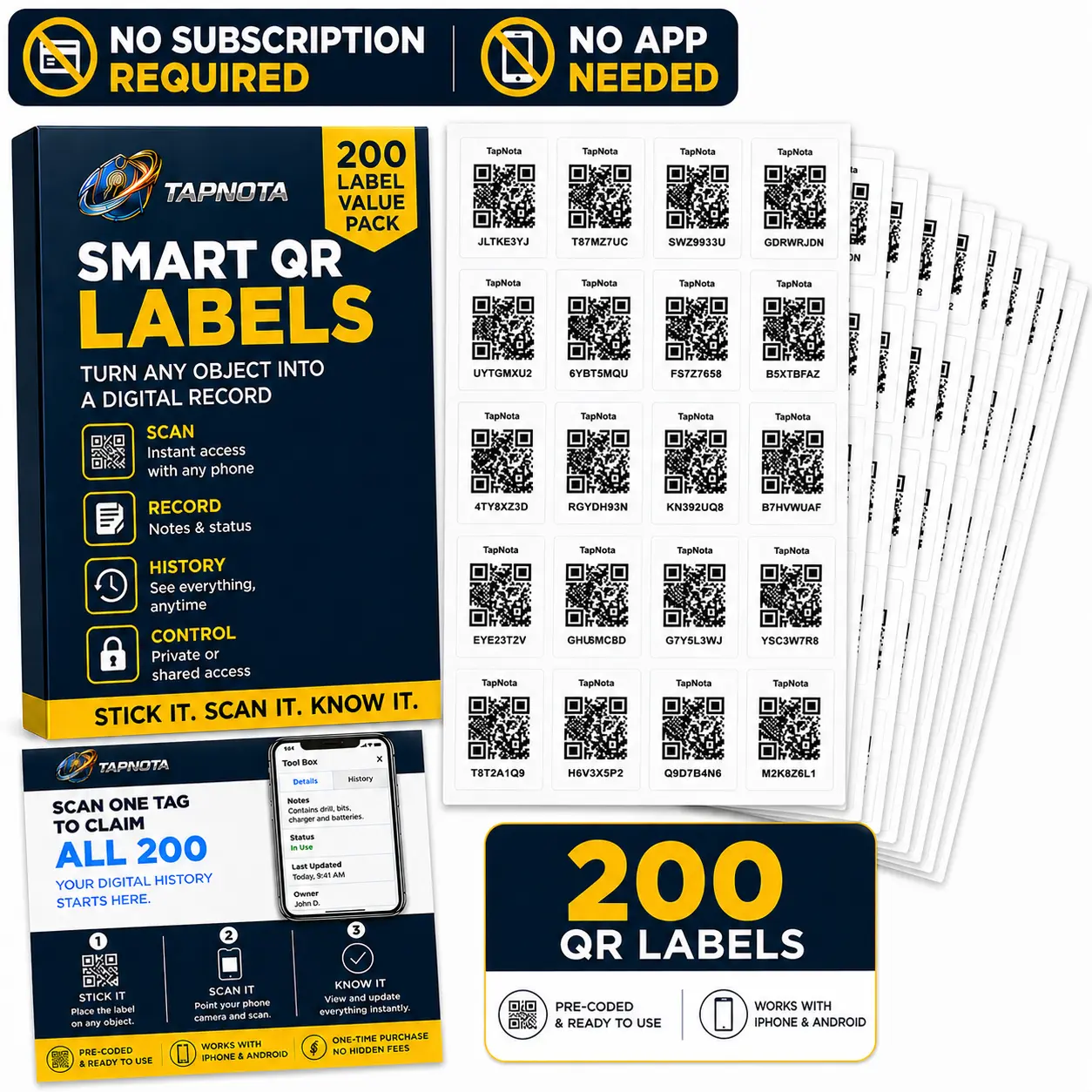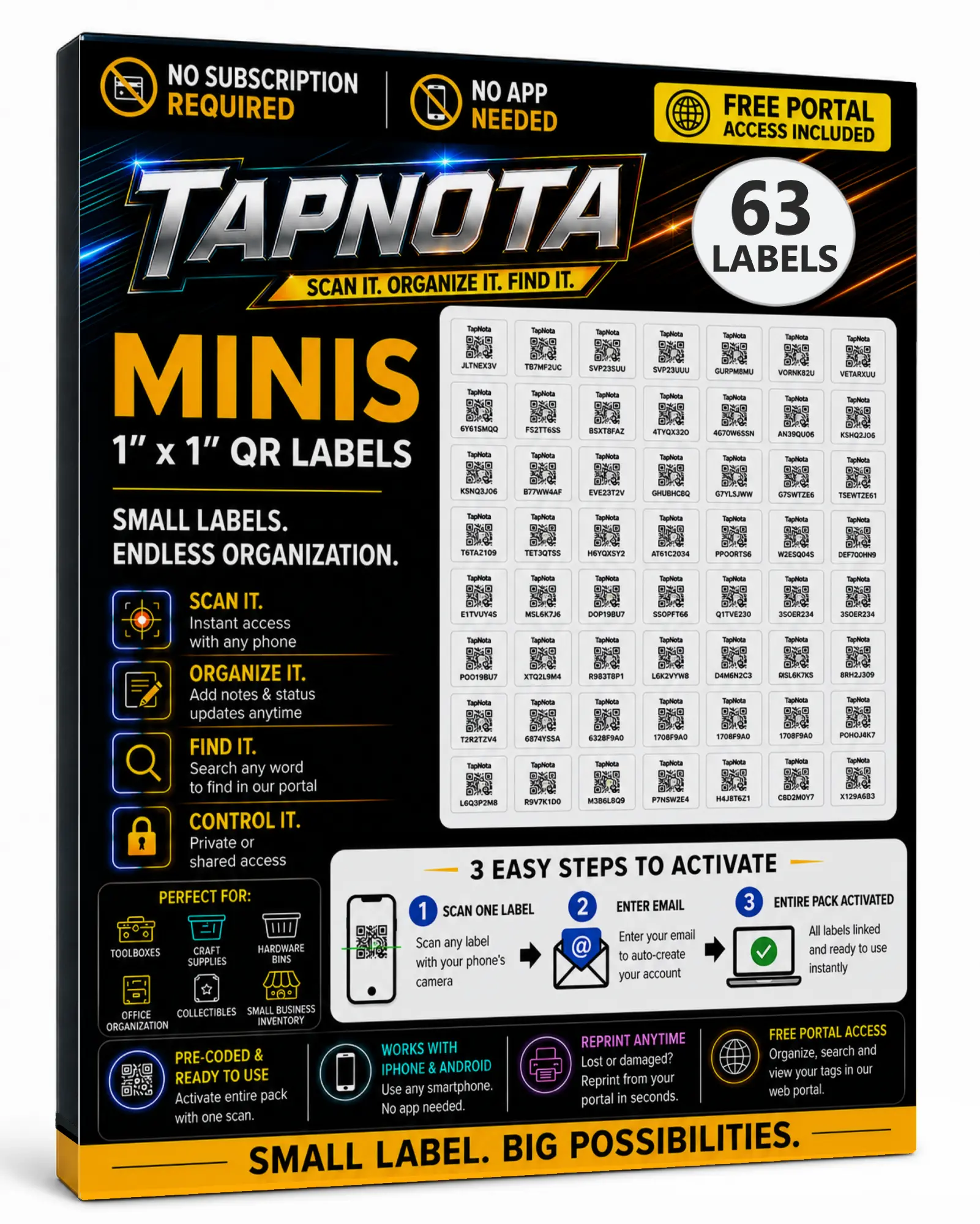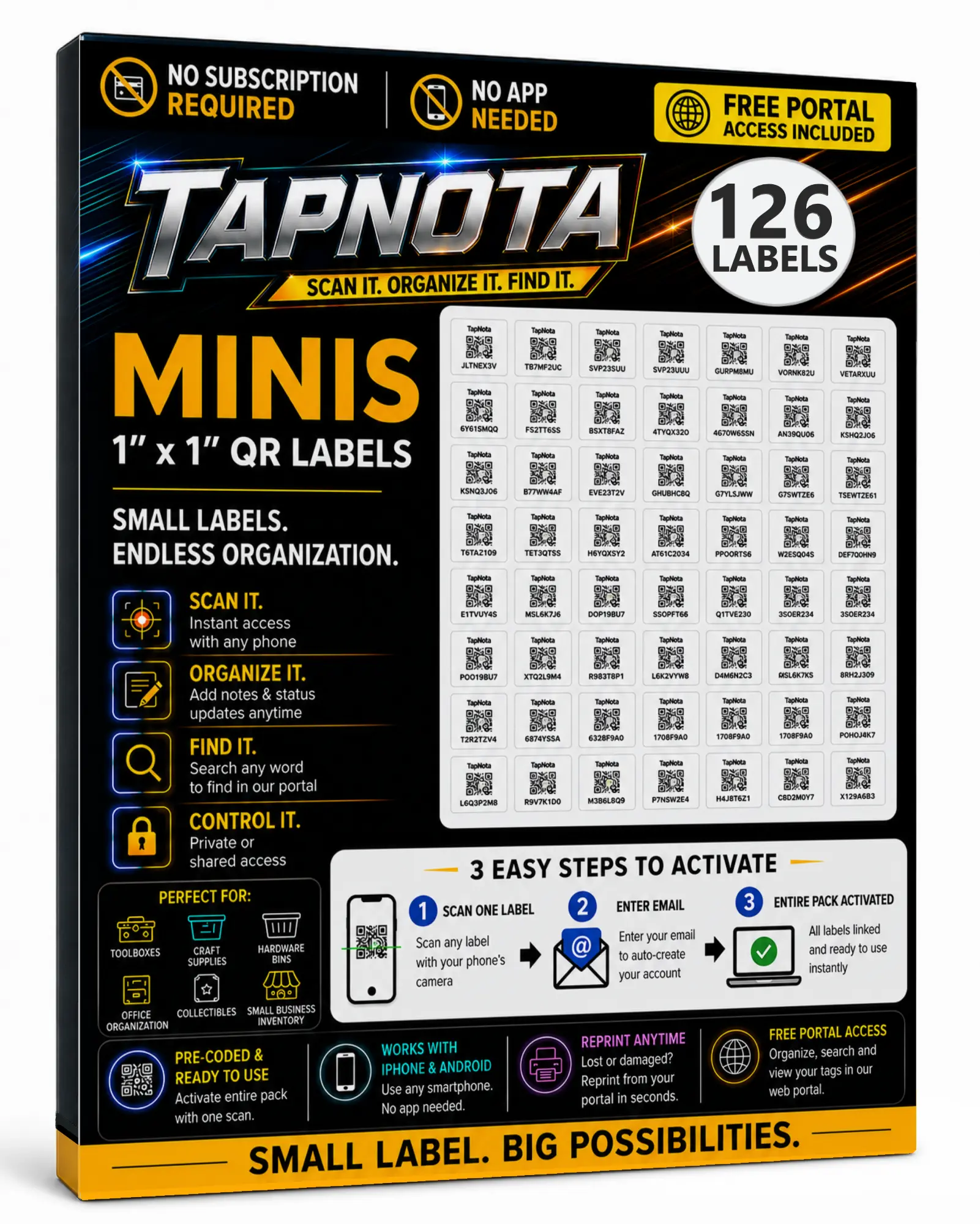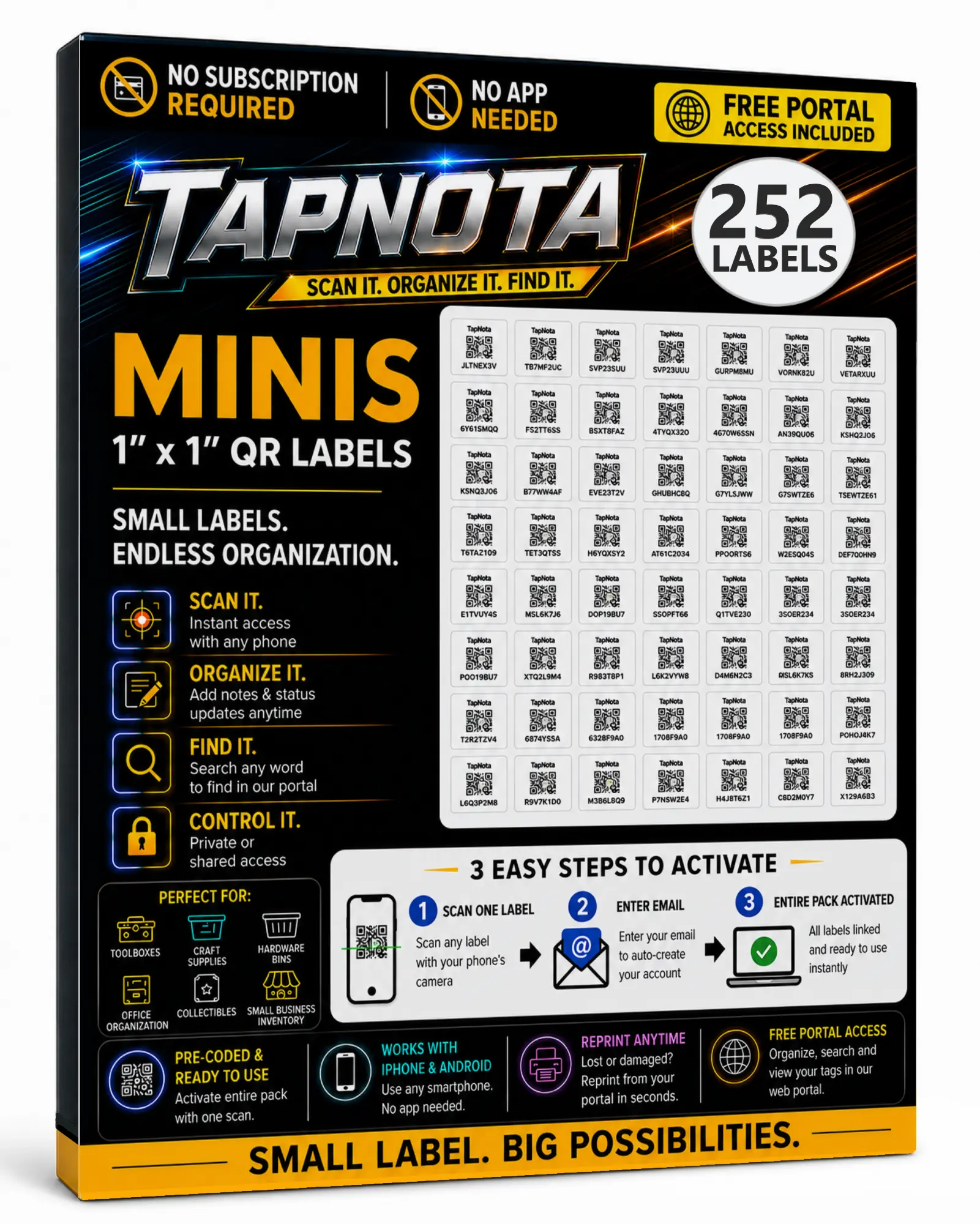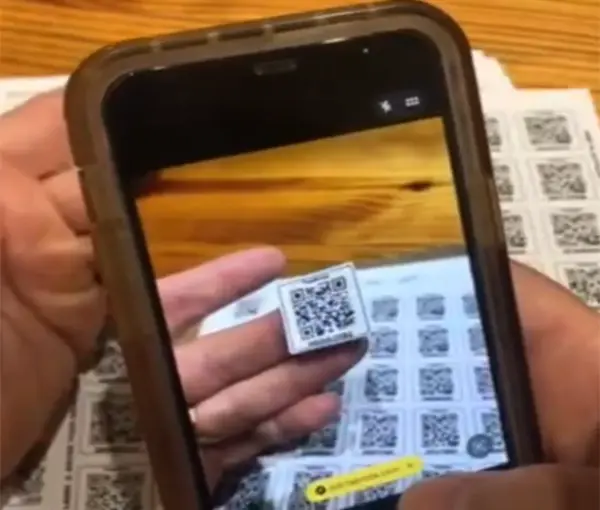
Activate the Entire Pack Once
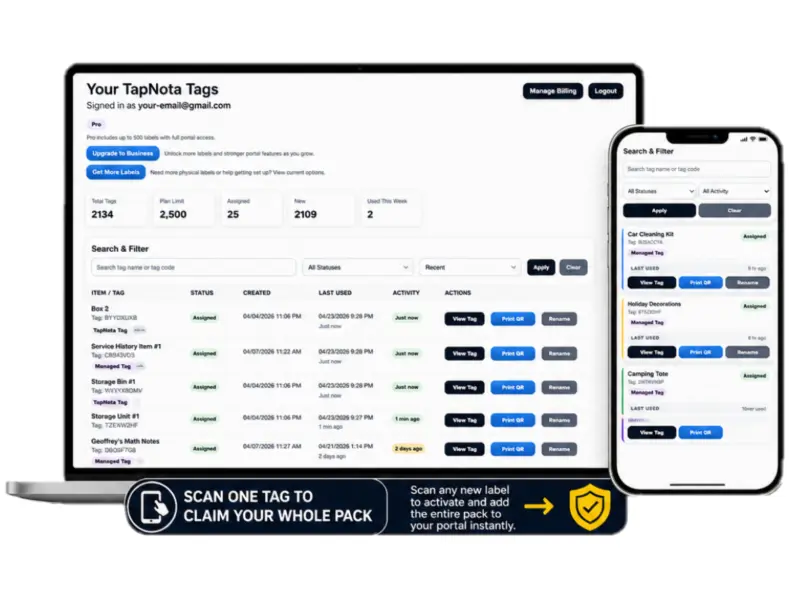
Scan any label in the purchased pack, enter and verify your email, and TapNota connects the whole pack to your account.
You do not activate every label separately.

Use this home inventory checklist to record furniture, electronics, tools, appliances, keepsakes, storage bins, documents, and other household belongings. Pair the checklist with TapNota QR labels to create a searchable digital record you can update anytime.
Home Inventory Checklist Image
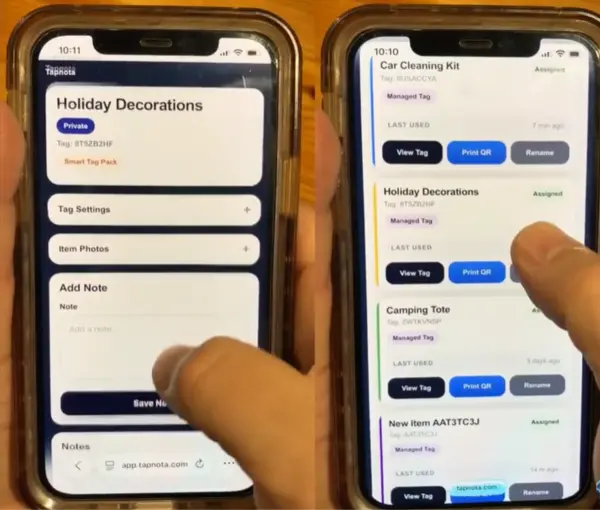
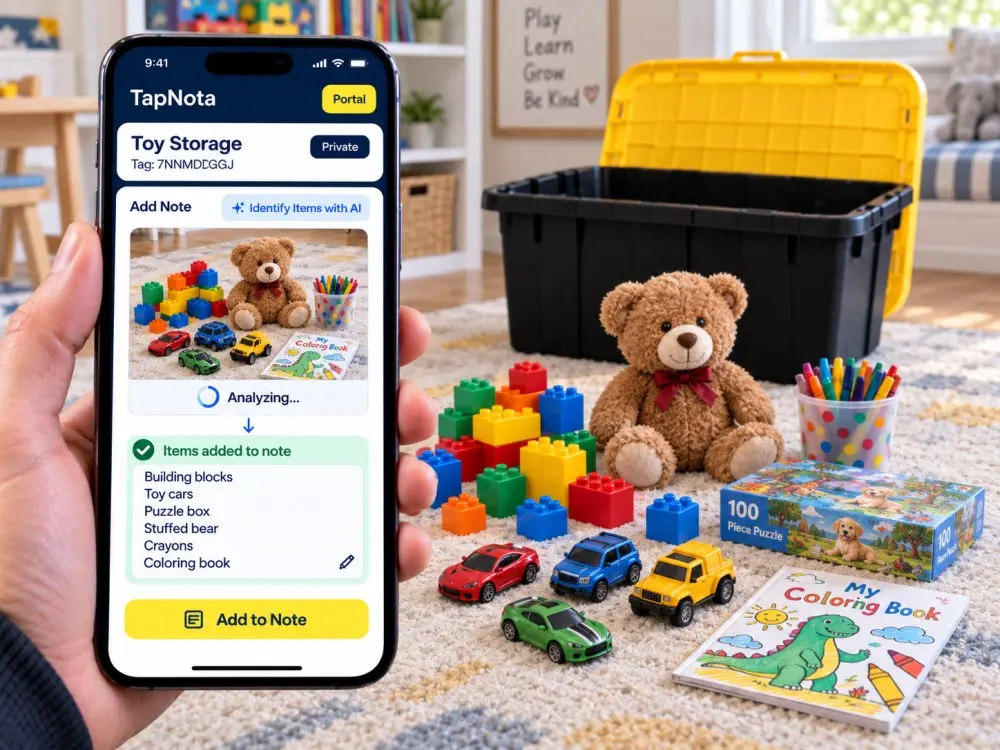
Add one lifestyle image showing organized household belongings, storage bins, and a phone displaying a TapNota inventory page.
A useful checklist should include enough information to identify, locate, understand, and update each belonging later.
Record the item name, category, quantity, color, size, model, or other identifying information.
Note the room, closet, cabinet, shelf, garage zone, storage bin, or other place where the item is kept.
Add photos showing the item, its condition, identifying marks, accessories, or the contents of a storage container.
Include the purchase date, price, retailer, warranty information, receipt notes, or ownership details when useful.
Record model numbers, serial numbers, product IDs, and other details that distinguish one item from another.
Keep maintenance details, repairs, ownership changes, updates, and other important history connected to the item.
Start small and build your inventory one room, category, or storage area at a time.
Begin with a single room or storage area so the project stays manageable.
Start with furniture, appliances, electronics, tools, valuables, and other important belongings.
Include photos, locations, purchase details, model numbers, notes, and condition.
Apply QR labels to bins, boxes, tools, equipment, and other belongings that need a connected digital record.
Group records by room, category, storage location, family member, or purpose.
Add new items, remove old records, and update locations whenever belongings move.
Use these categories as a starting point and add anything unique to your household.
Prioritize belongings that are valuable, difficult to replace, easy to misplace, or important to maintain.
A paper checklist helps you start. TapNota keeps records connected to the physical belongings through QR labels.
| Feature | Paper Checklist or Spreadsheet | TapNota Digital Inventory |
|---|---|---|
| Record item details | Enter information manually | Create a dedicated item page |
| Connect record to item | Separate from the physical item | Scan the QR label to open the record |
| Add photos | Stored separately or embedded manually | Upload photos directly to the item page |
| Track locations | Update cells or handwritten notes | Update the item record anytime |
| Search belongings | Search the document | Search the TapNota portal |
| Share selected items | Share the entire document or make copies | Share individual item pages |
| Replace a damaged label | Create a new label manually | Reprint the existing QR code |
A home inventory is most useful when it stays current. Update records whenever belongings are purchased, sold, moved, repaired, or replaced.
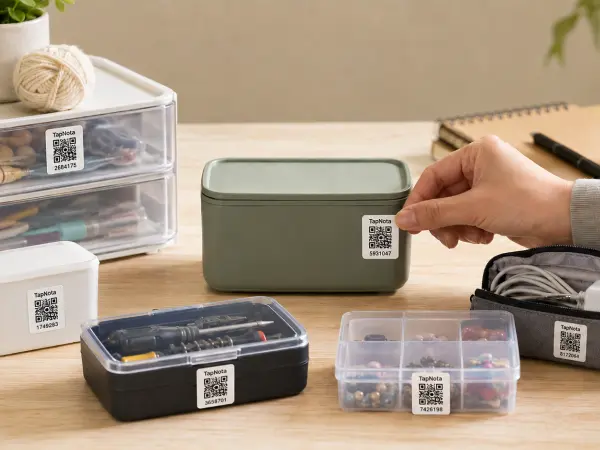
TapNota Product Image
Add one product image showing TapNota label packs with labels applied to household items, equipment, and storage bins.
Use original 2-inch TapNota labels for bins, equipment, appliances, and larger belongings, or TapNota Minis for tools, electronics, drawers, and smaller household items.
Explore related TapNota pages for digital inventory, QR labels, household organization, and storage management.
Follow the checklist, document the belongings that matter, and use TapNota QR labels to keep each record connected to the physical item.
Need more labels? Buy additional TapNota pre-coded packs on Amazon. Scan one label to activate your entire pack instantly.