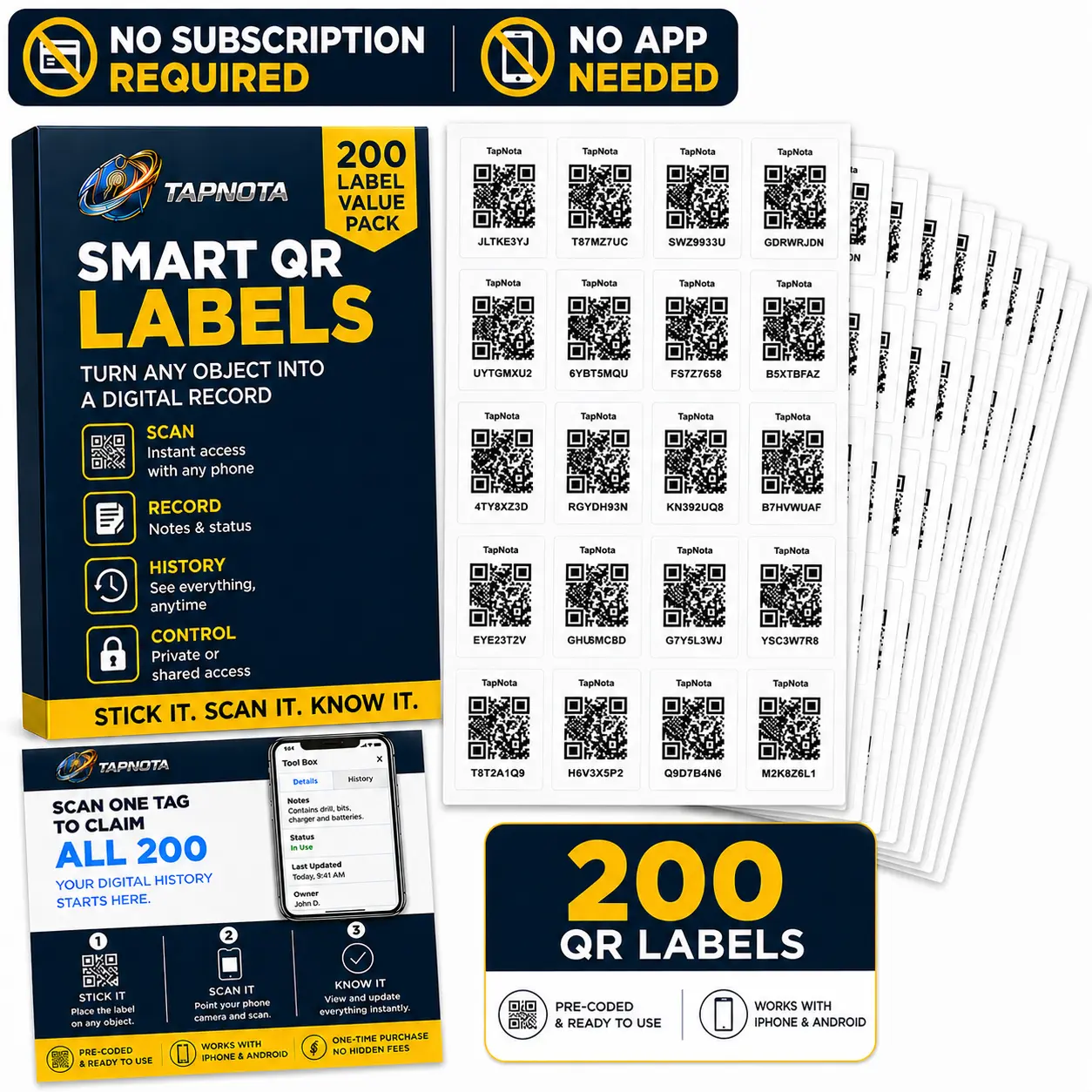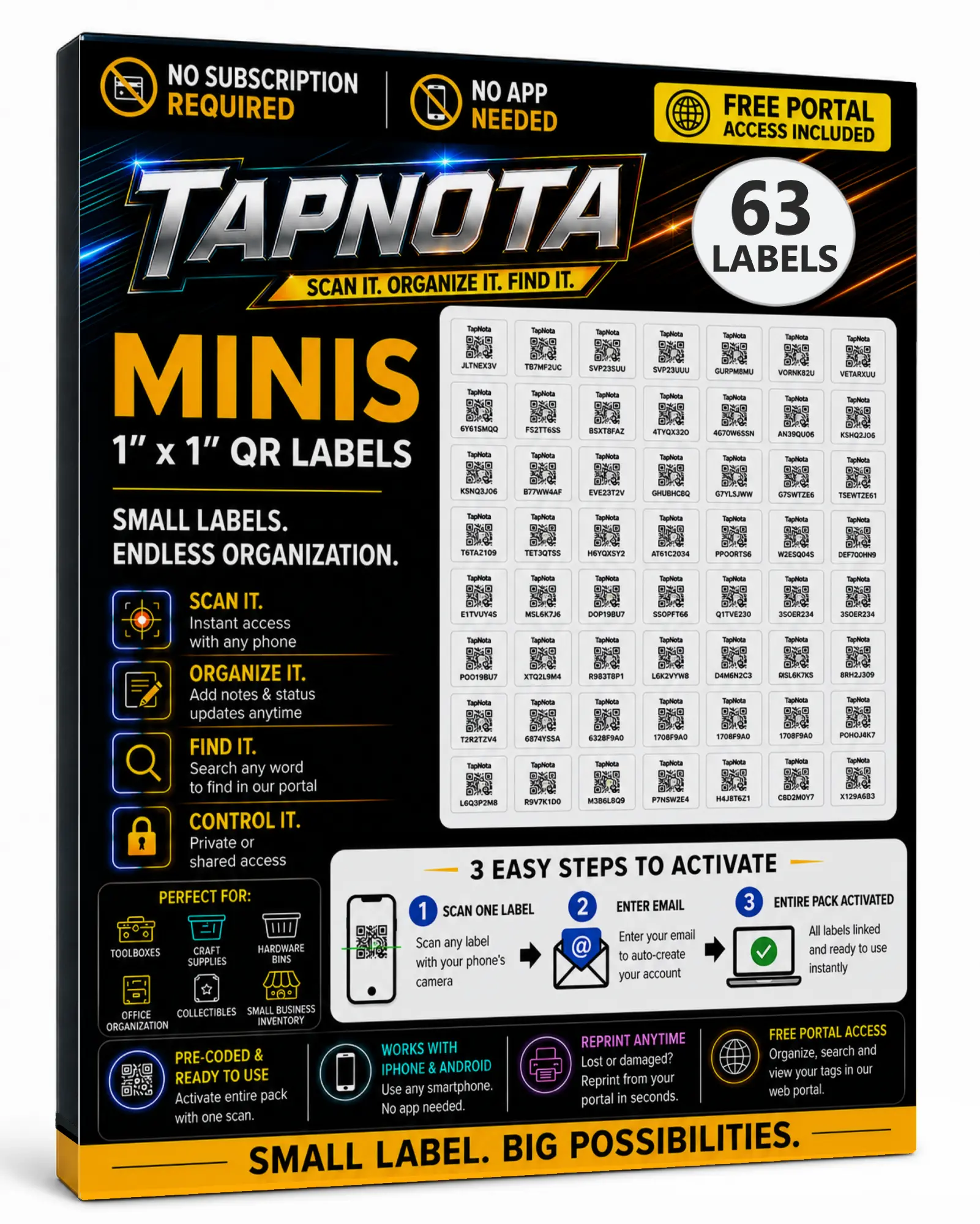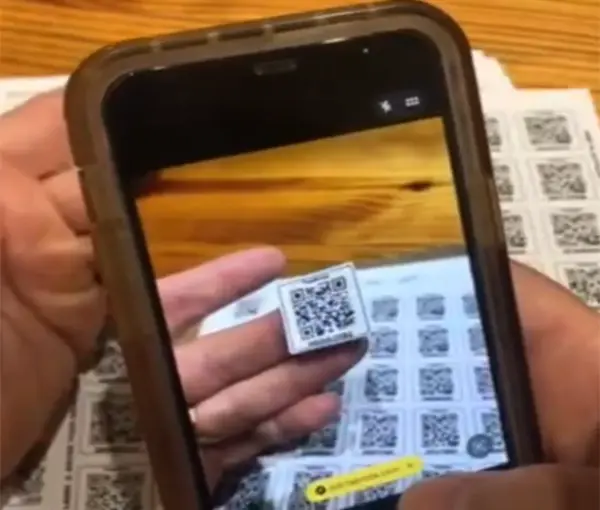
Activate the Entire Pack Once
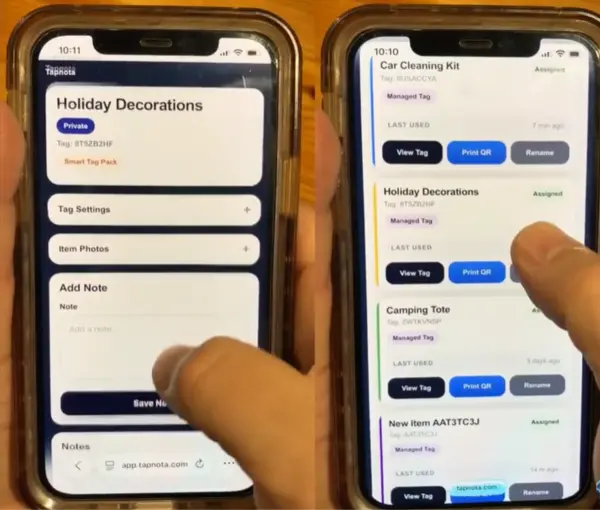
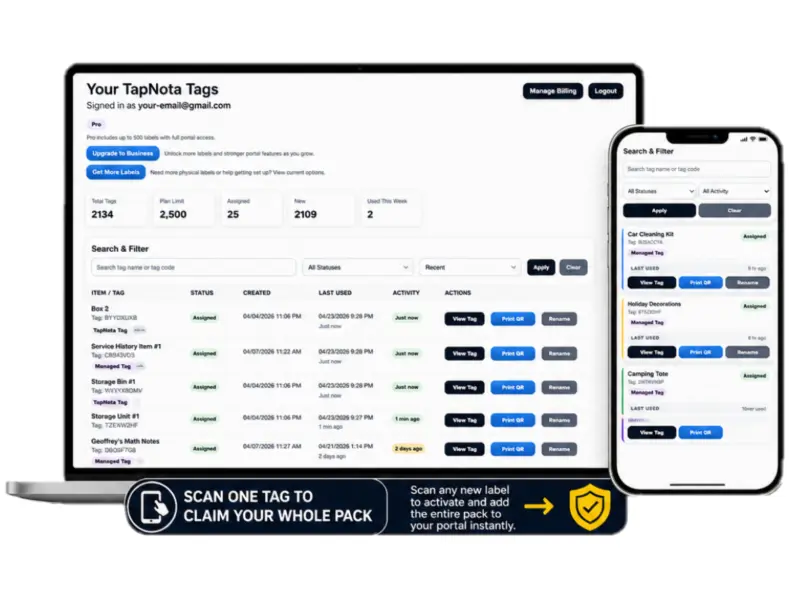
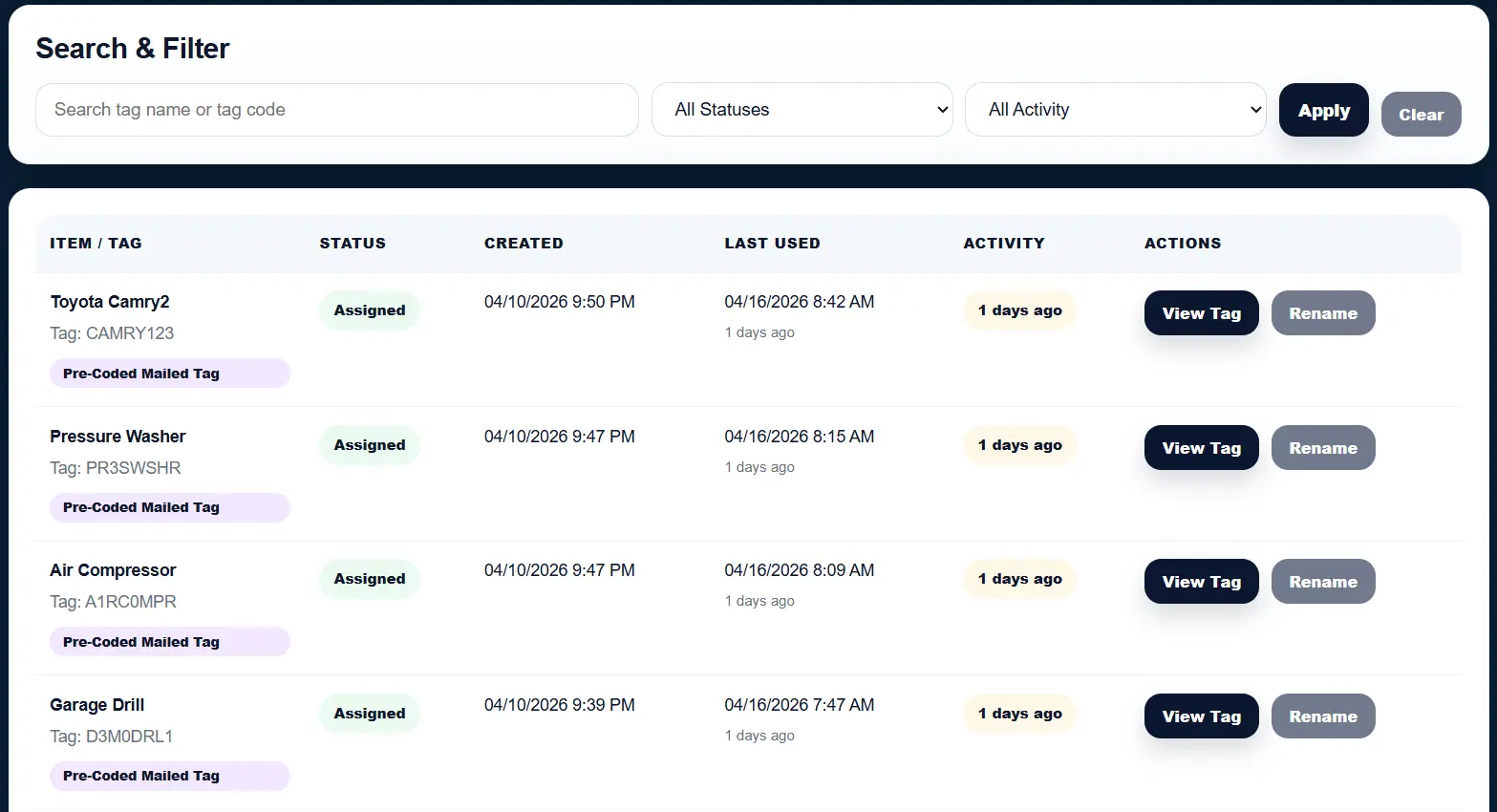
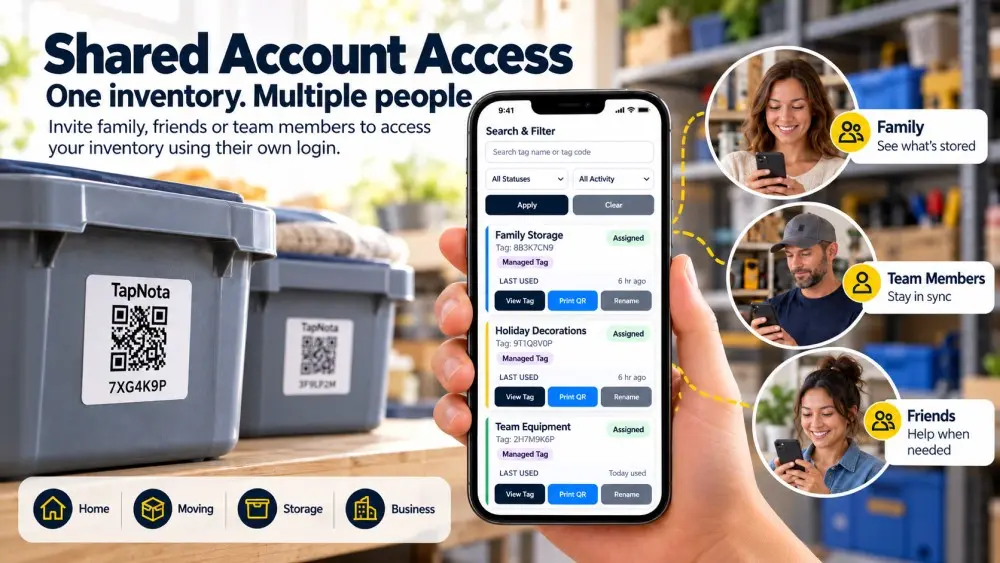
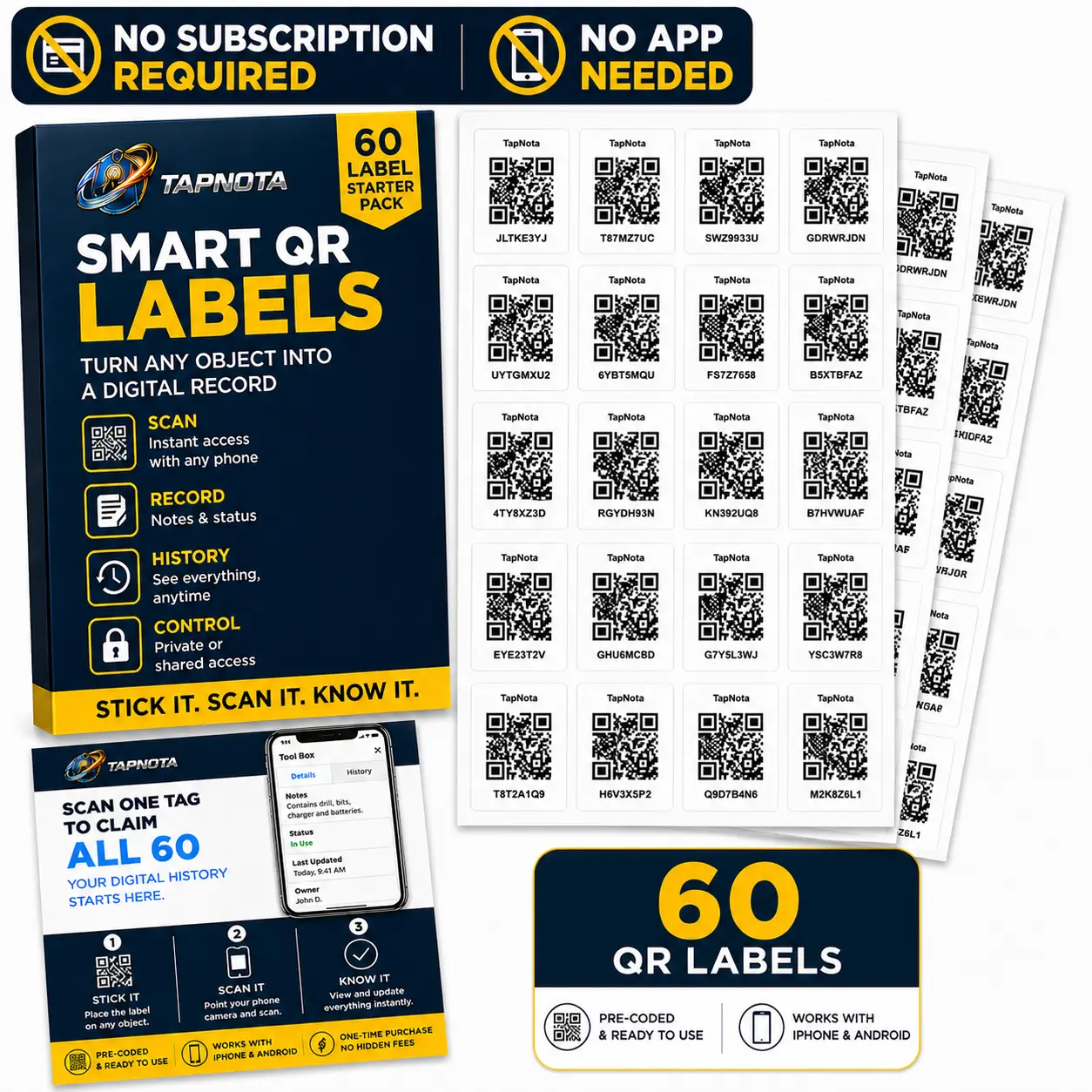
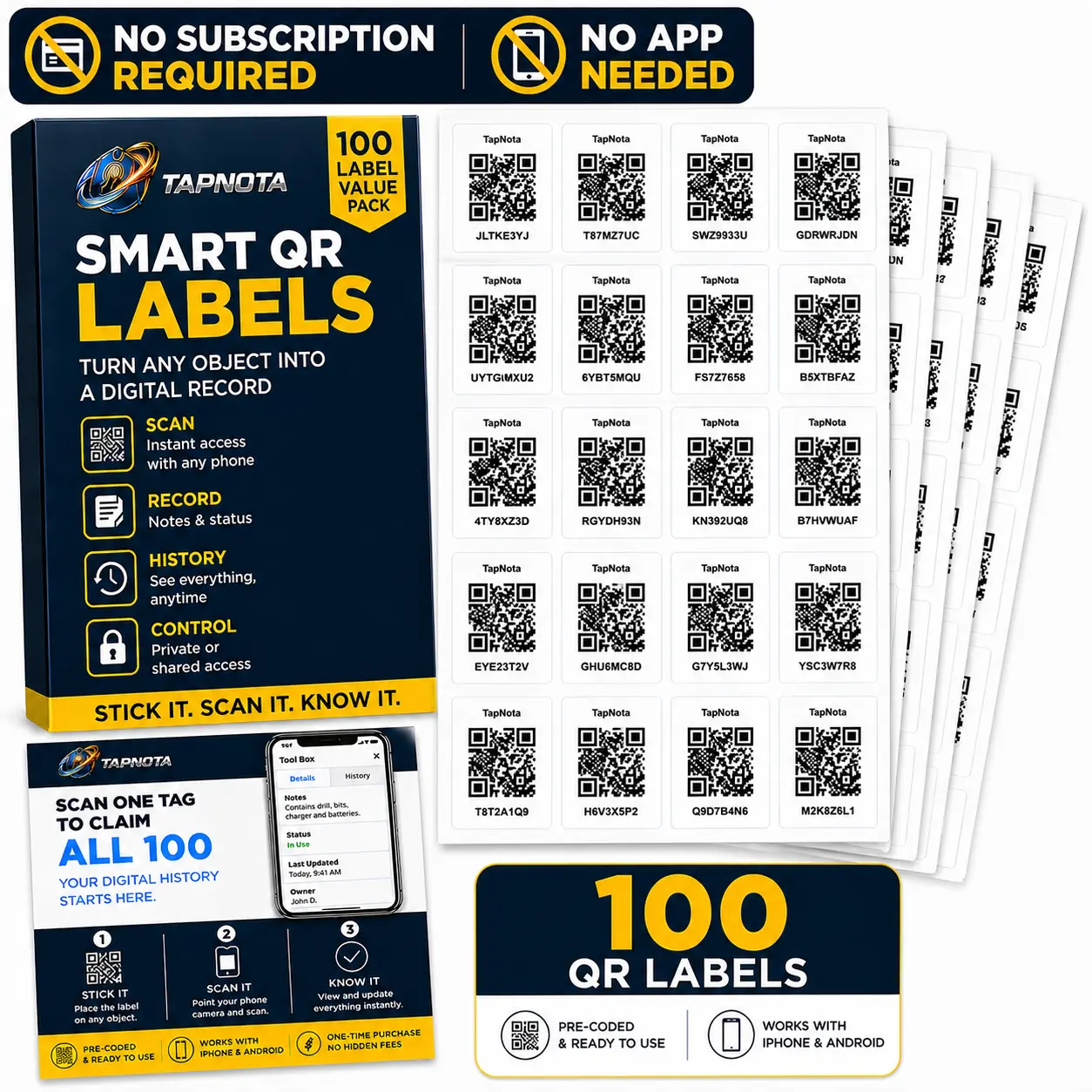
Scan any label in the purchased pack, enter and verify your email, and TapNota connects the whole pack to your account.
You do not activate every label separately.

Organize basement storage bins, shelves, holiday decorations, tools, keepsakes, household supplies, seasonal items, backup inventory, and long-term storage with TapNota. QR labels connect each bin, shelf, cabinet, or zone to searchable contents, photos, notes, locations, and history.
Basement Storage Organization Image
Add one lifestyle image showing organized basement shelves, labeled bins, household storage, and a phone displaying TapNota.
Basement storage is easier to maintain when every wall, shelf, cabinet, and floor area has a defined purpose.
Group holiday decorations, seasonal clothing, party supplies, outdoor items, and rotating household storage together.
Separate tools, paint, hardware, repair parts, cleaning supplies, batteries, extension cords, and maintenance equipment.
Organize extra kitchenware, keepsakes, documents, furniture parts, linens, backup supplies, and rarely used belongings.
Build a system that protects stored items and makes the basement easier to search, clean, and maintain.
Check walls, floors, pipes, windows, drains, and corners for leaks, condensation, pests, mold, or signs of water damage.
Group holiday items, tools, keepsakes, supplies, clothing, documents, household overflow, and project materials separately.
Donate, discard, relocate, or properly dispose of damaged, expired, unsafe, duplicate, or moisture-sensitive items.
Keep walkways clear and assign walls, racks, cabinets, shelves, and floor areas to specific categories.
Keep containers off the floor whenever possible and use latching bins for items that need protection from dust, pests, or moisture.
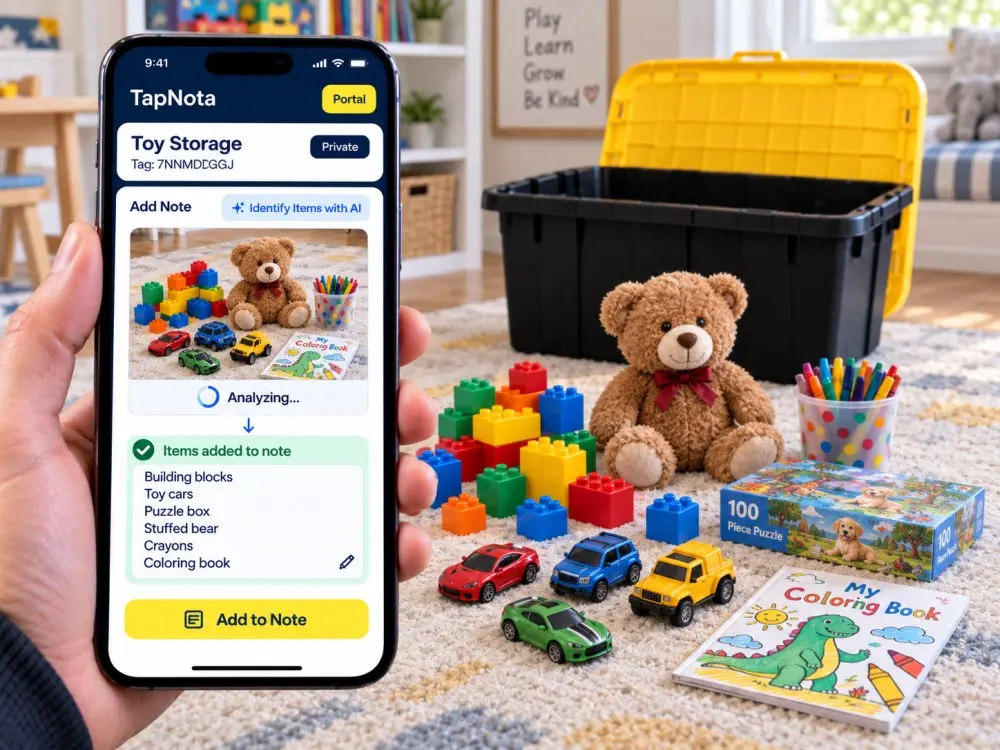
Add clear outside labels and use TapNota for detailed contents, photos, notes, exact shelf locations, and update history.
Basements work best for sturdy, well-contained items that can be grouped into clear categories.
Track ornaments, lights, wreaths, trees, table décor, outdoor decorations, and seasonal supplies.
Organize hand tools, power tools, fasteners, repair parts, paint supplies, and project materials.
Store clean, dry bedding, blankets, towels, curtains, and seasonal fabrics in sealed containers.
Track extra cookware, dishes, serving pieces, appliances, party supplies, and seasonal kitchenware.
Organize memory boxes, heirlooms, albums, sentimental items, and family collections carefully.
Label bins by person, size, season, age, category, or future use.
Track paper goods, cleaning supplies, toiletries, emergency supplies, and bulk household items.
Store only in dry, controlled areas and use sealed containers when moisture is a concern.
Avoid storing irreplaceable paper records, valuable photos, electronics, food, medications, or moisture-sensitive items directly on basement floors or in areas with leaks, high humidity, pests, or temperature swings.
A strong basement organization system begins with safe storage conditions.
A traditional label shows a category. TapNota connects each basement bin, shelf, cabinet, or zone to searchable and updatable information.
| Feature | Traditional Basement Label | TapNota Basement Storage Organization |
|---|---|---|
| Identify the category | Short handwritten or printed label | Clear label plus a connected digital record |
| List detailed contents | Limited by label space | Add complete searchable contents |
| Add photos | Stored separately | Upload photos directly to the bin or shelf page |
| Track exact location | Rely on memory or a separate list | Record the room, wall, rack, shelf, bin, or zone |
| Update contents | Rewrite or replace the label | Update the digital page without relabeling |
| Record condition | Use another note | Add moisture, damage, repair, or inspection notes |
| Replace a damaged label | Create a new label manually | Reprint the existing QR code |
Basement storage changes throughout the year. Keep the same QR label while updating the connected record.
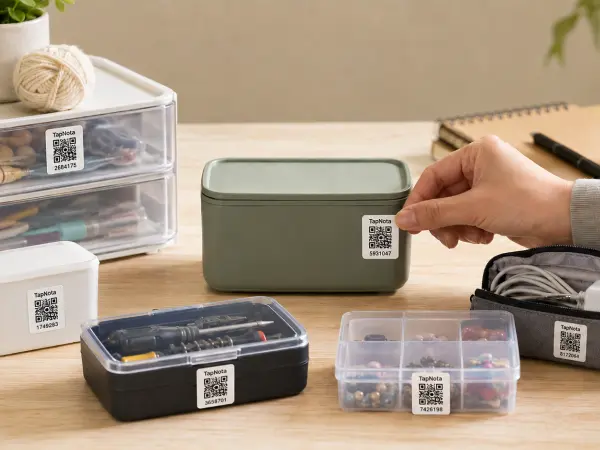
TapNota Product Image
Add one product image showing TapNota labels on basement bins, shelves, cabinets, seasonal storage, tools, or household supplies.
Use original 2-inch TapNota labels on basement bins, shelves, cabinets, racks, totes, seasonal storage, and larger household containers. TapNota Minis work well on drawers, smaller boxes, tool cases, accessory bins, and compact stored items.
Explore related TapNota pages for storage labels, plastic bins, household inventory, keepsakes, holiday storage, and room organization.
Organize every shelf, rack, cabinet, bin, and long-term storage area, then use TapNota QR labels to keep contents, photos, notes, and exact locations easy to find.
Need more labels? Buy additional TapNota pre-coded packs on Amazon. Scan one label to activate your entire pack instantly.