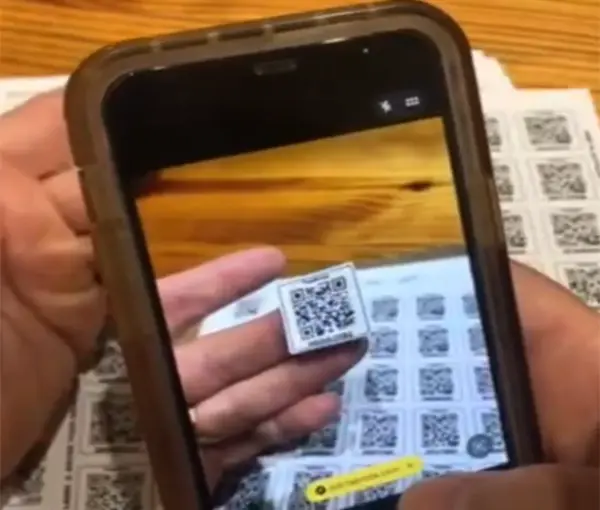
Activate the Entire Pack Once
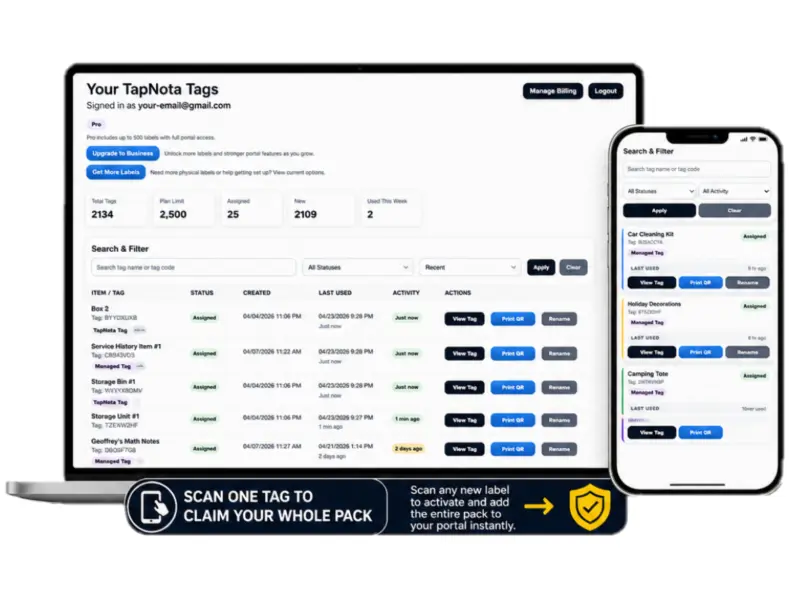
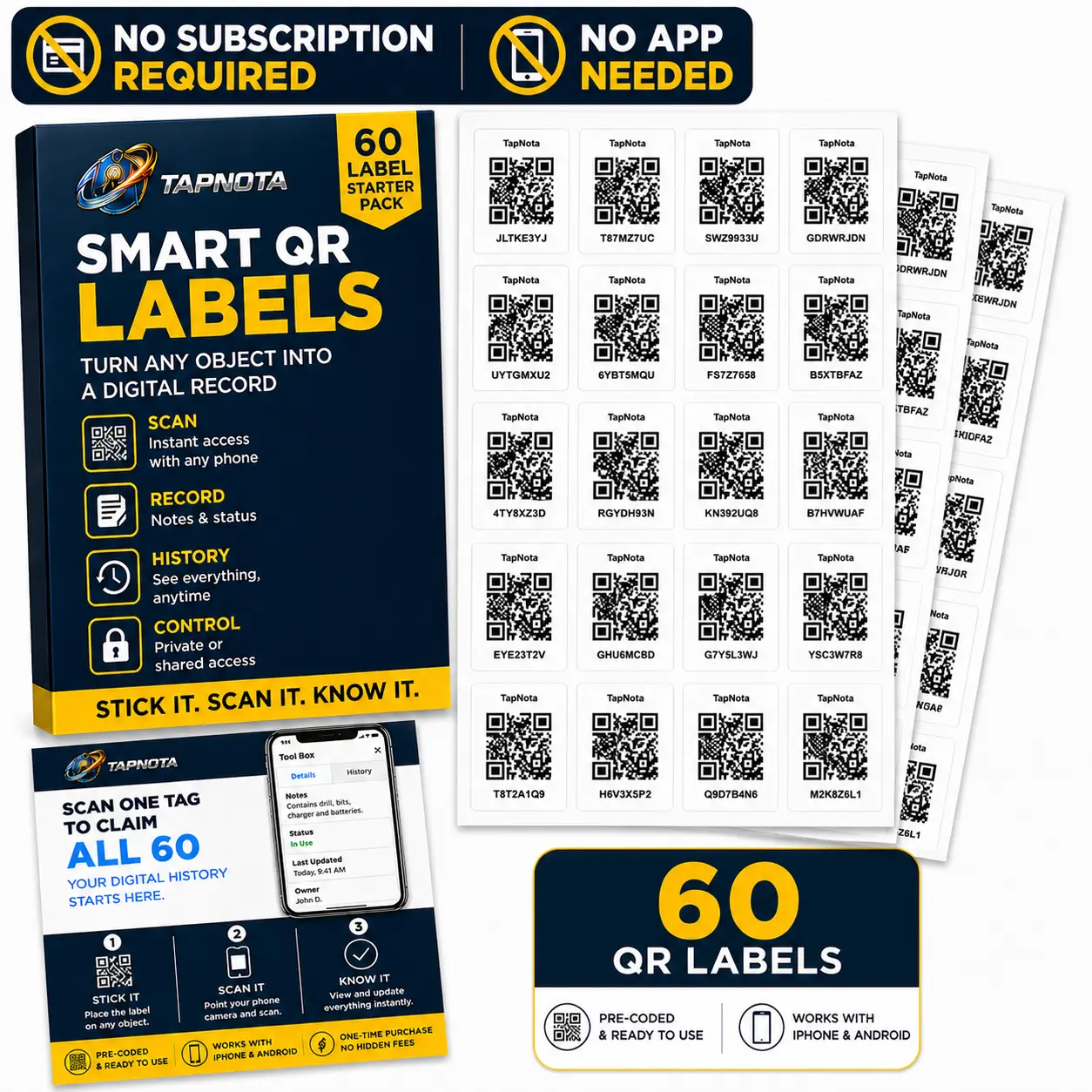
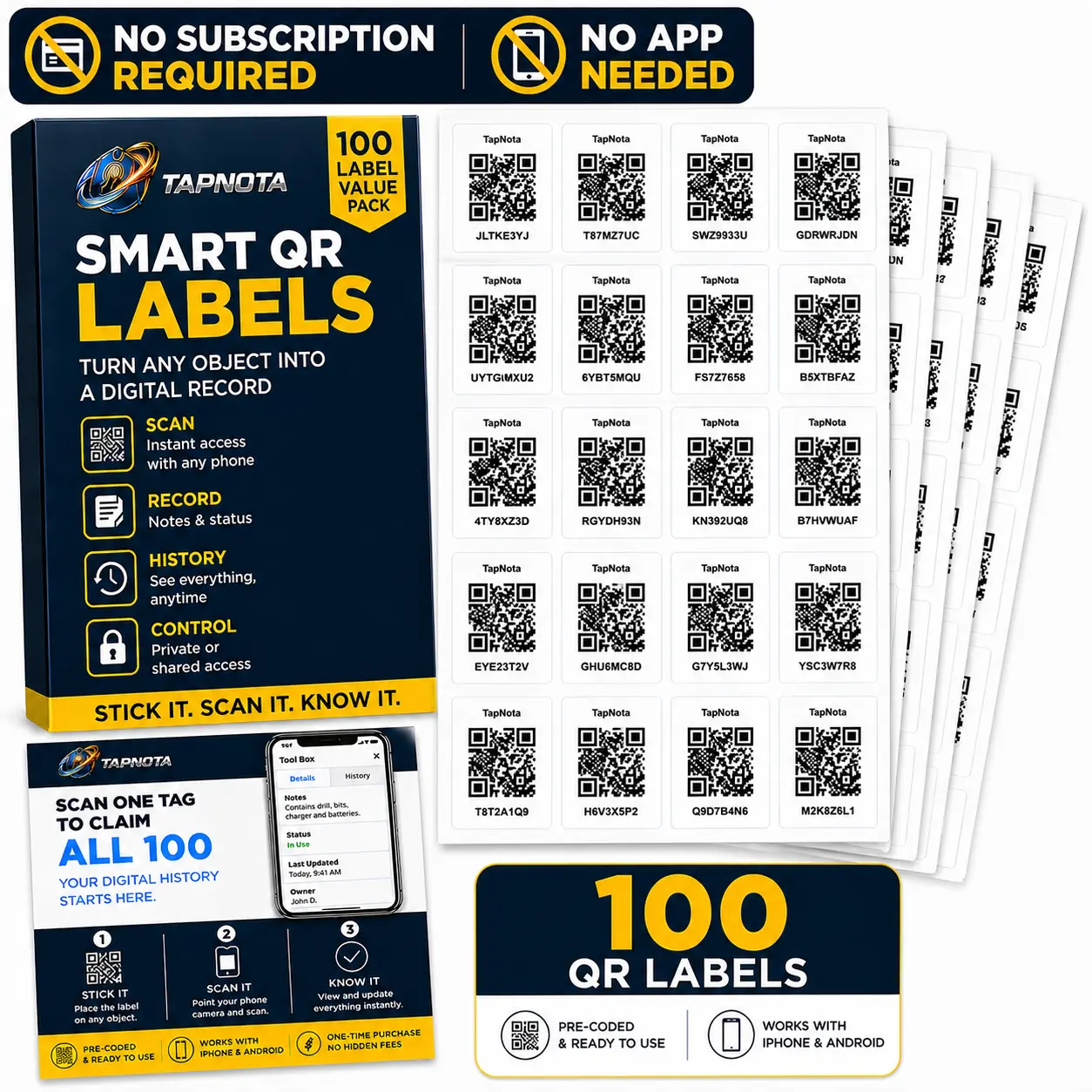
Scan any label in the purchased pack, enter and verify your email, and TapNota connects the whole pack to your account.
You do not activate every label separately.

Learn how to organize storage bins by category, room, frequency of use, and priority. Use consistent labels and searchable QR records so you can find stored items without opening every container.
Organized Storage Bin Image
Add one lifestyle image showing neatly grouped storage bins with consistent labels in a garage, closet, attic, or storage room.
Buying more bins does not automatically create organization. First decide what you are keeping, group similar items together, and choose storage locations that match how often each category is used.
Remove broken, expired, duplicate, or unwanted items before organizing the remaining belongings.
Place holiday décor, camping gear, clothing, tools, keepsakes, and household supplies into separate categories.
Keep frequently used items accessible and move seasonal or long-term storage to higher shelves or less convenient areas.
Follow these steps to create a system that remains useful as your belongings and storage needs change.
Review the items you plan to store. Remove anything you no longer need before assigning categories or buying containers.
Group items by room, activity, season, family member, or purpose. Avoid combining unrelated belongings in the same bin.
Match the bin size and material to the contents. Use sturdy, stackable containers for heavy or long-term storage.
Give each category a consistent shelf, wall, closet, cabinet, or section of the storage room.
Use specific names and consistent placement. Number similar bins so each container has a unique identity.
Keep a contents list and update it whenever items are added, removed, or moved to another bin.
Storage zones make it easier to return items to the correct place and reduce the number of bins you need to search.
Group automotive supplies, tools, lawn equipment, sports gear, and home-maintenance items by shelf or wall.
Keep holiday décor, seasonal clothing, outdoor accessories, and event supplies together.
Organize camping, fishing, sports, crafts, and hobby supplies into purpose-based groups.
Sort clothes by season, size, family member, or type so future use is easier to plan.
Store family memories, school items, photographs, and sentimental objects in a protected, clearly labeled area.
Group cleaning supplies, replacement parts, pantry overflow, linens, and backup household items.
The best location depends on how often you need the contents. Avoid placing everyday items behind long-term storage.
Container size, visibility, strength, and lid style all affect how easy the system is to maintain.
| Bin Type | Best For | Watch For | Organization Tip |
|---|---|---|---|
| Clear plastic bins | General household and frequently viewed storage | Visible contents can still look cluttered | Use a clear category label and contents record |
| Opaque plastic bins | Light-sensitive items and cleaner-looking storage | Contents cannot be seen from outside | Use detailed labels or QR records |
| Small divided bins | Hardware, crafts, tools, and small accessories | Easy to overfill or mix categories | Label individual compartments or groups |
| Heavy-duty totes | Garage, attic, outdoor, and long-term storage | Weight can become difficult to move | Keep heavy items in smaller containers |
| Fabric bins | Closets, shelves, clothing, and lightweight items | Less protection from moisture and dust | Use for accessible indoor storage |
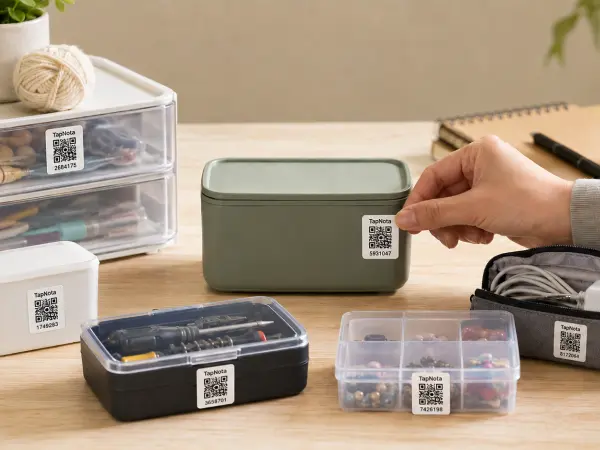
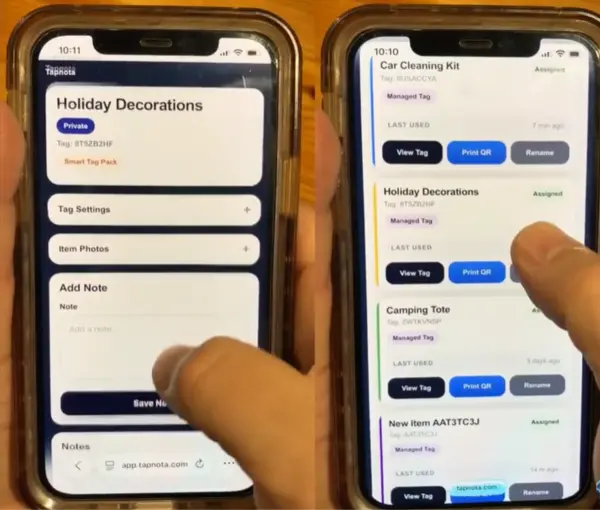
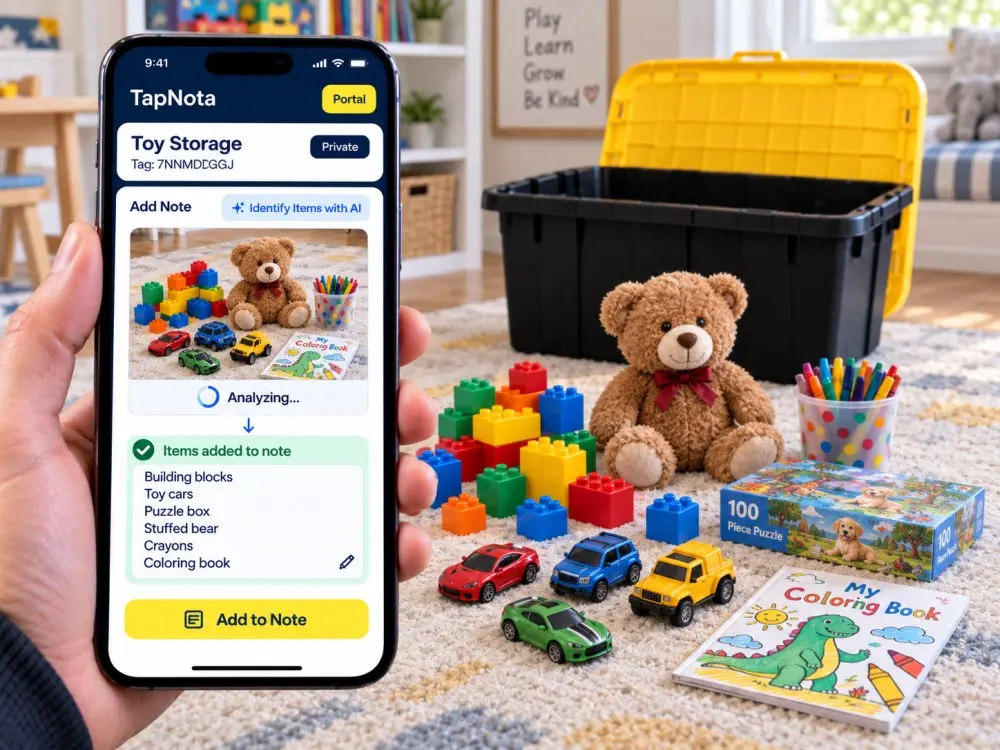
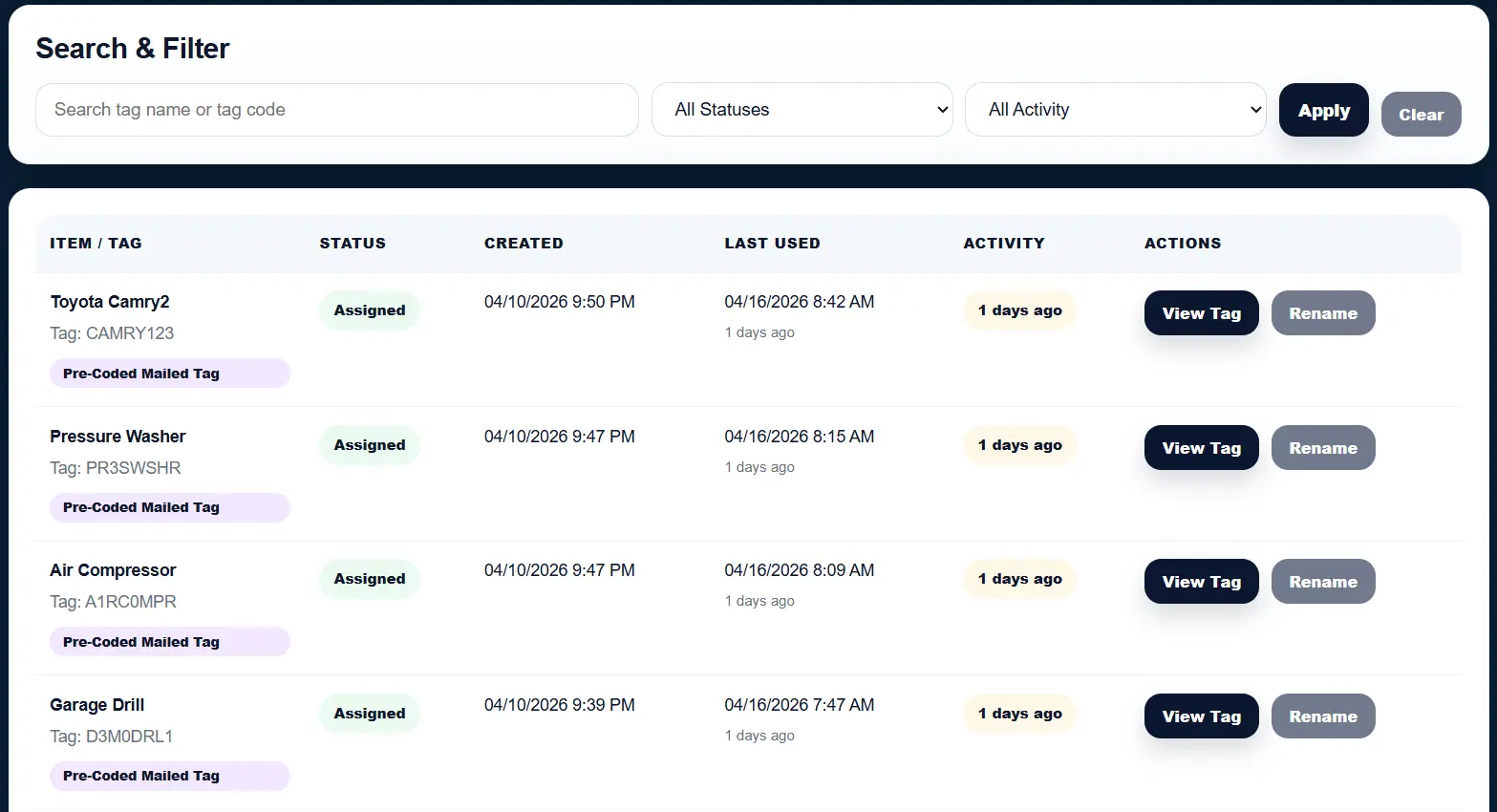
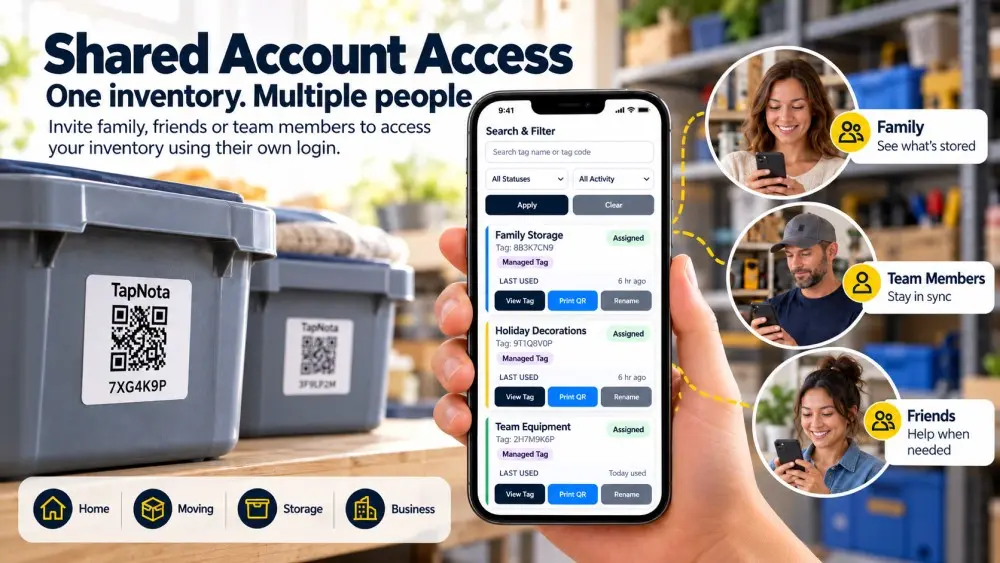
A physical label can show the main category. A TapNota QR label can connect the same container to detailed contents, photos, notes, folders, and history.
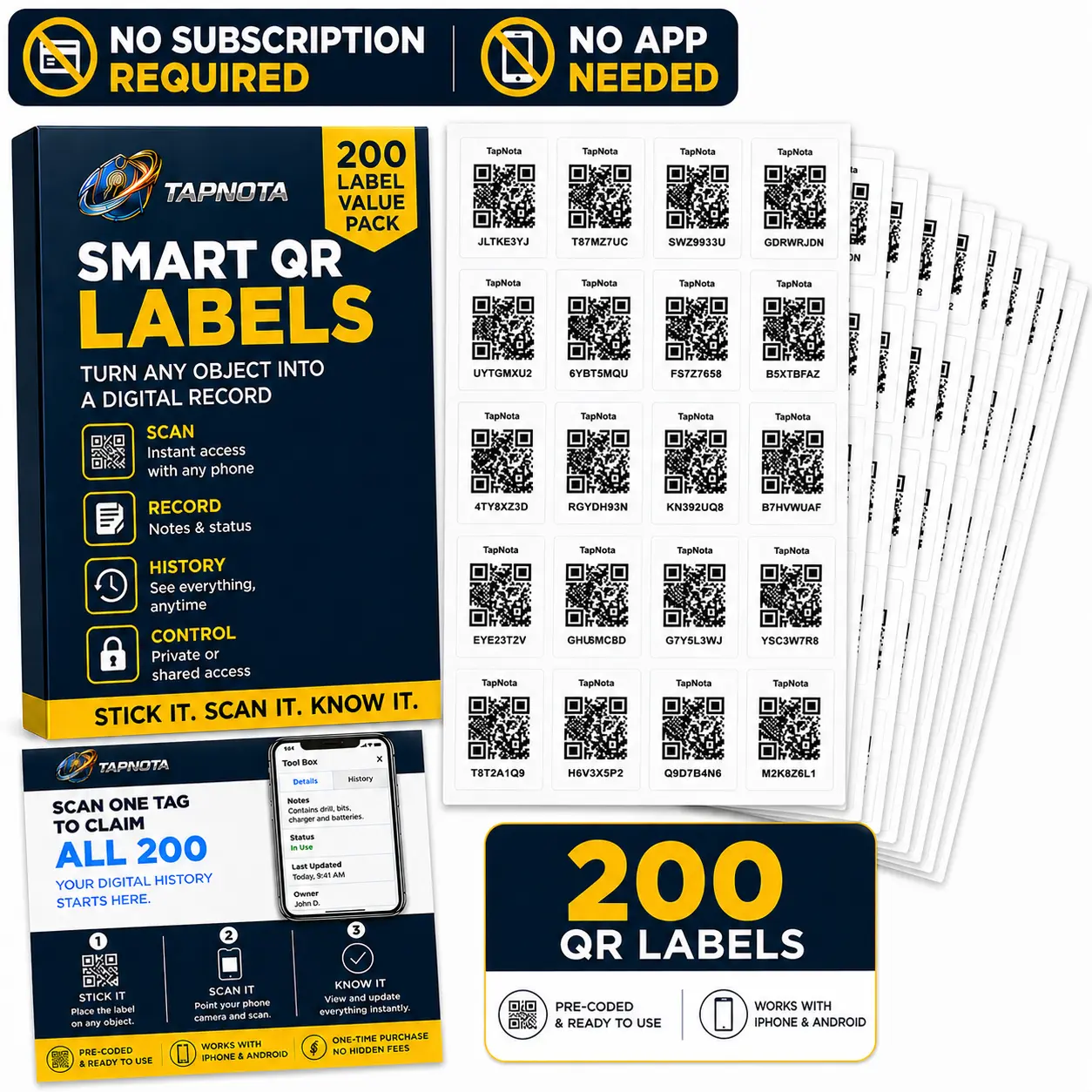
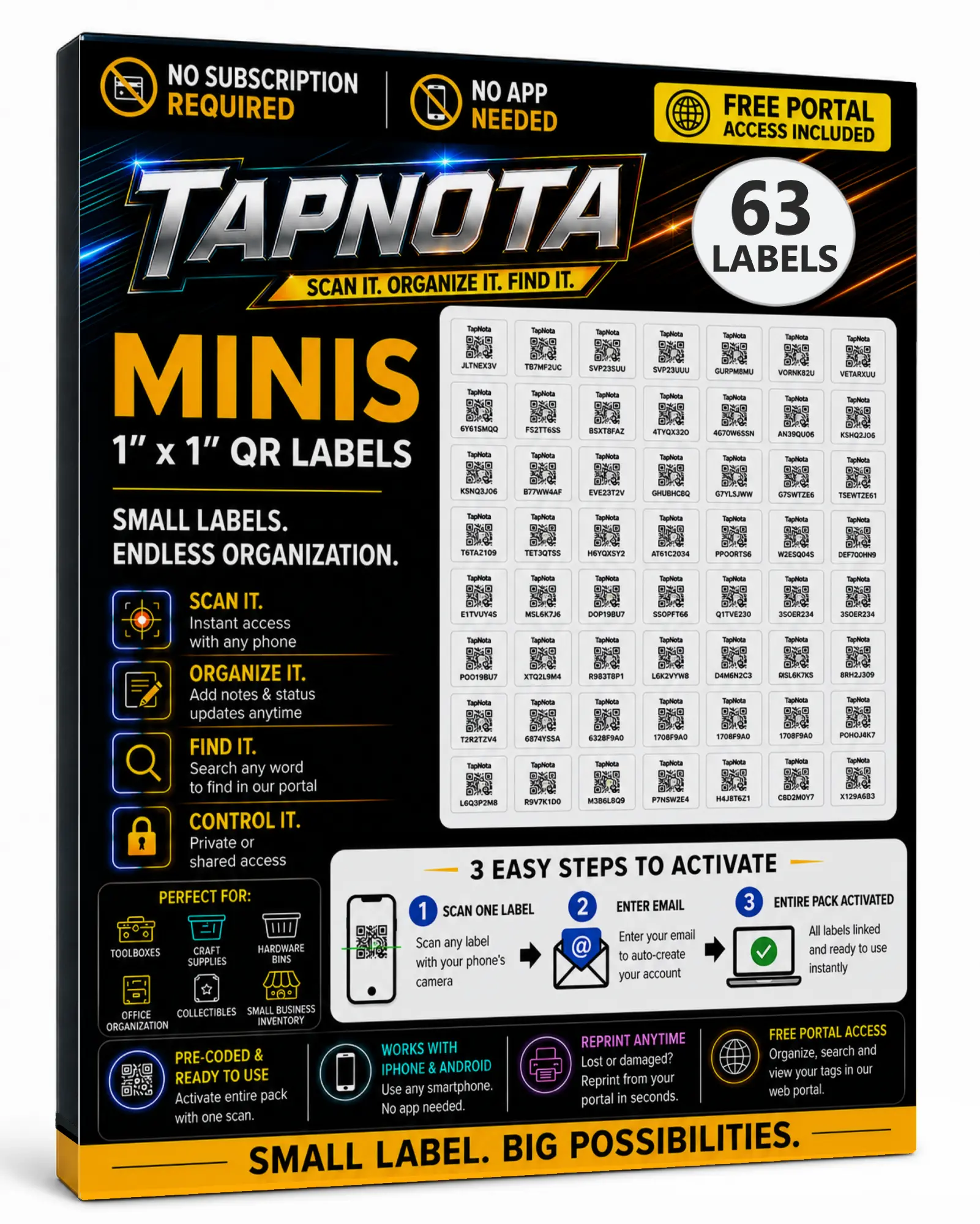
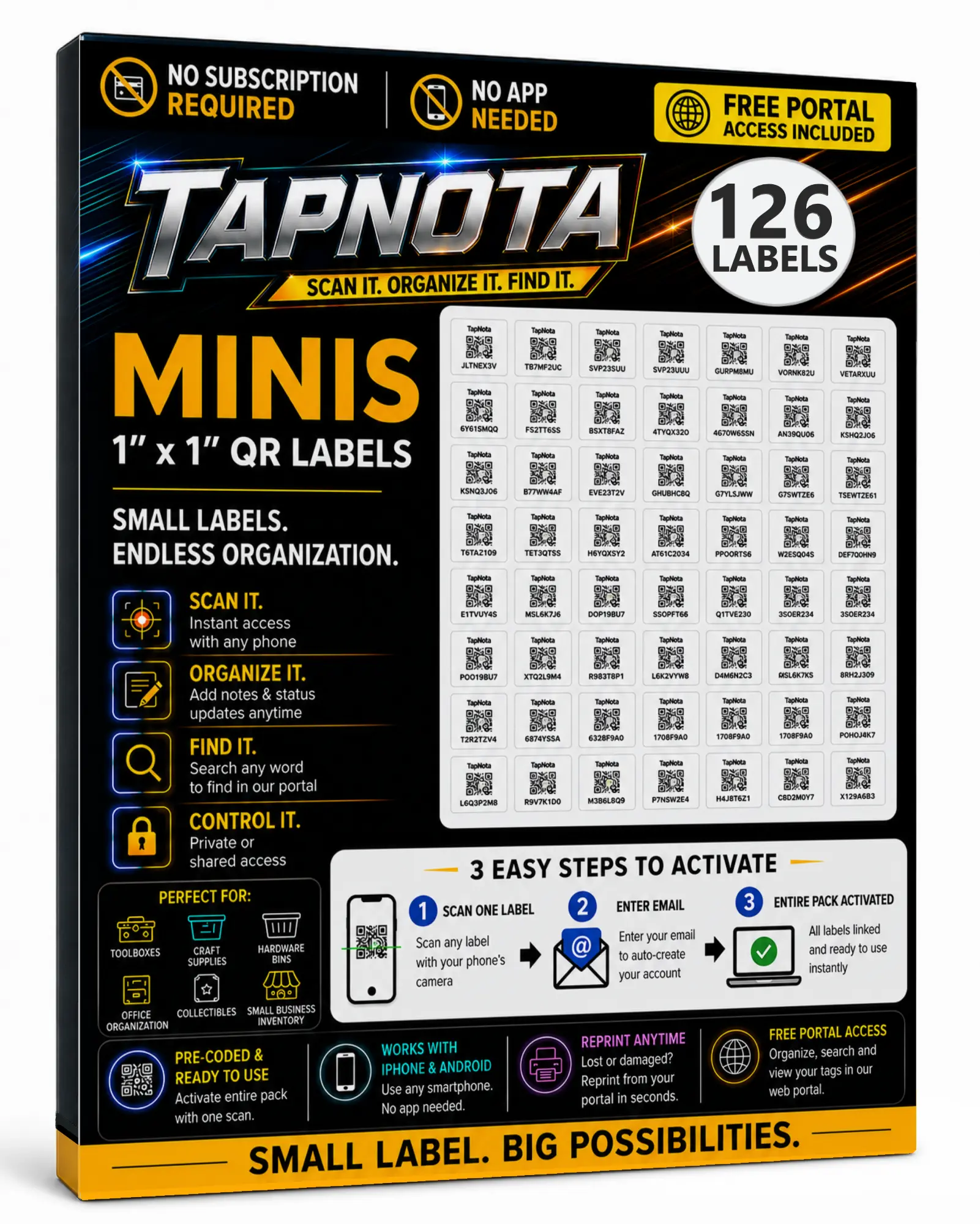
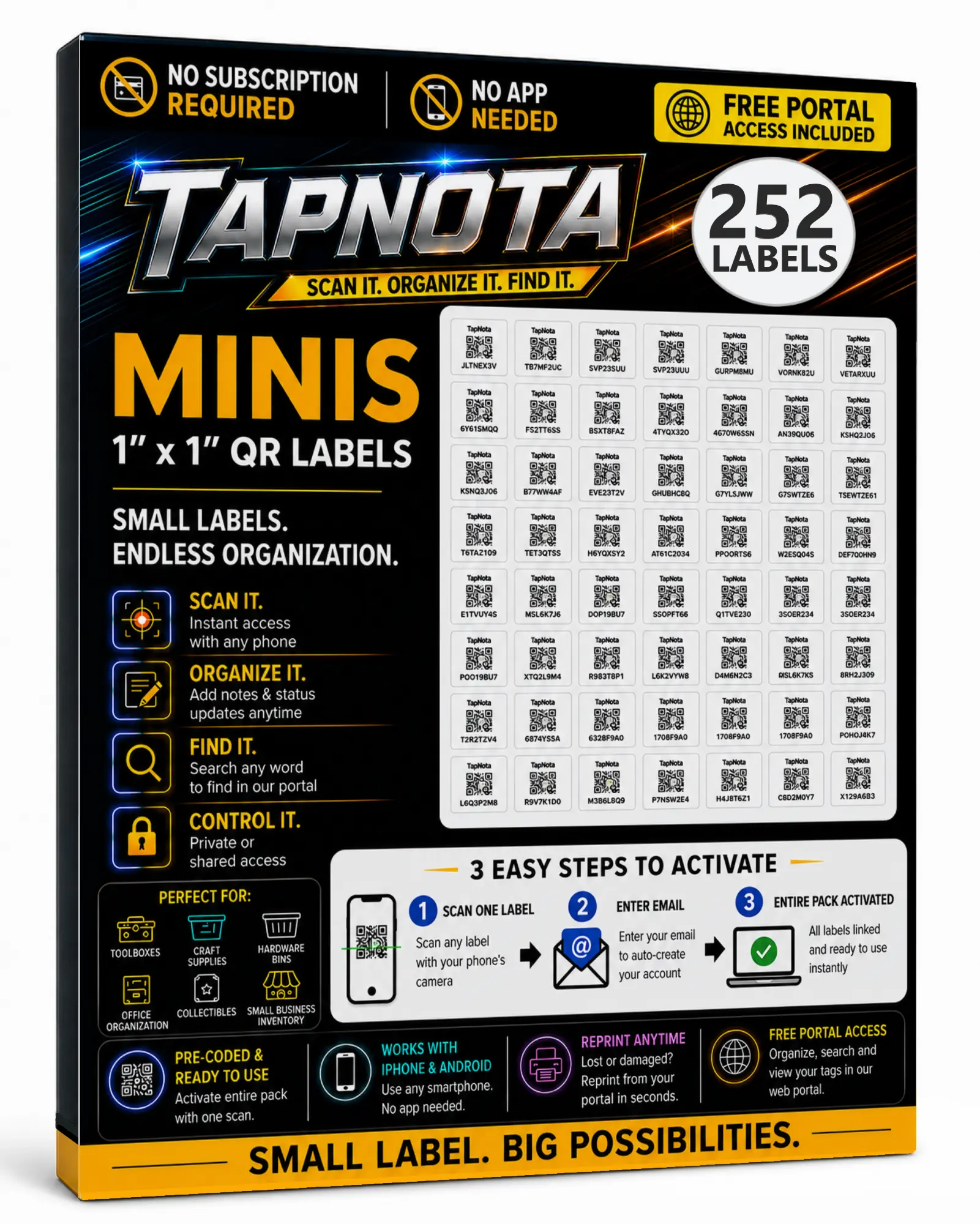
TapNota Product Image
Add one product image showing TapNota label packs with several organized and labeled storage bins.
TapNota QR labels keep detailed contents, notes, photos, and history connected to each physical storage bin, so your organization system remains useful even when contents change.
Explore related TapNota guides for labeling bins, creating home inventories, and managing storage.
Sort by category, assign clear storage zones, label consistently, and use searchable digital records to find items faster.
Need more labels? Buy additional TapNota pre-coded packs on Amazon. Scan one label to activate your entire pack instantly.