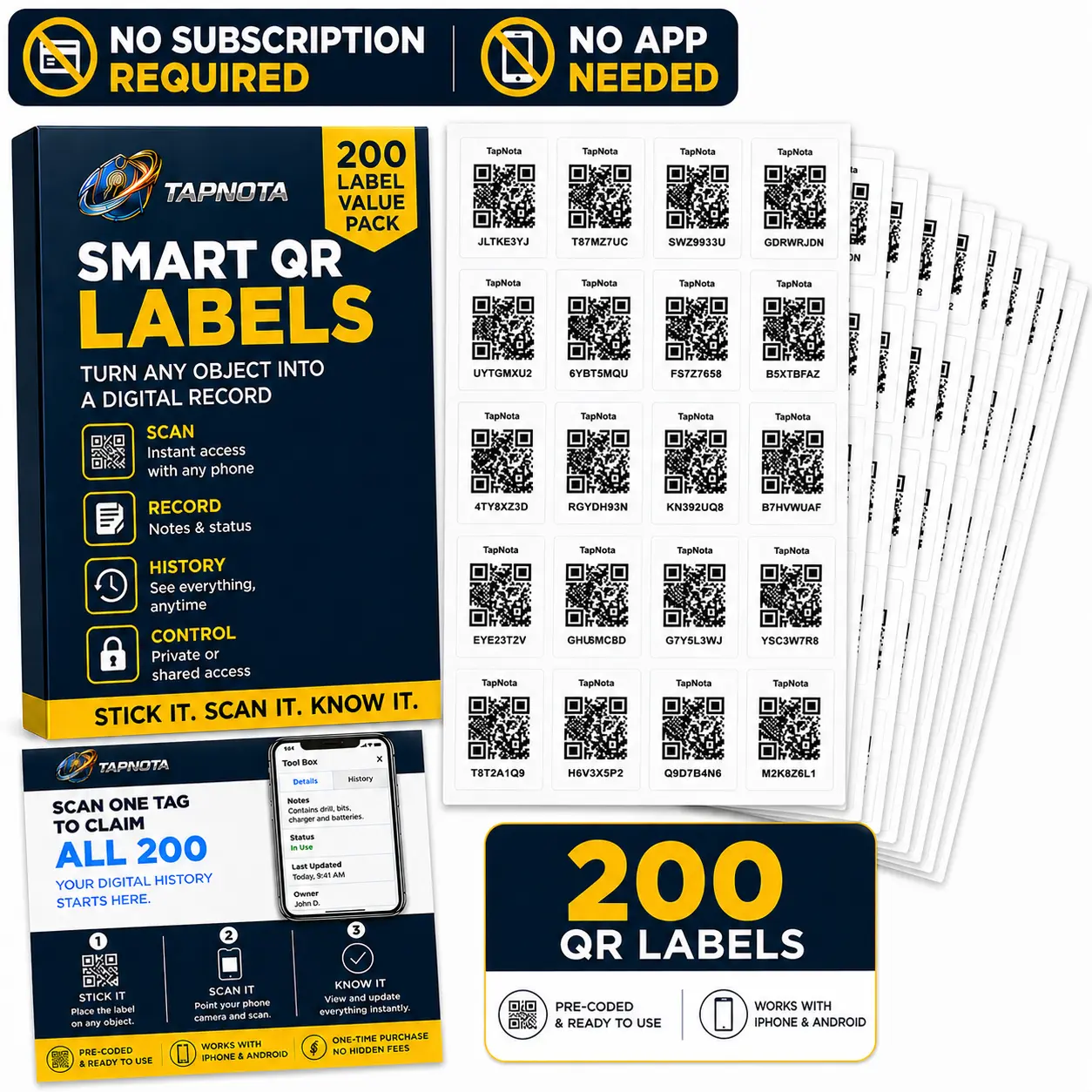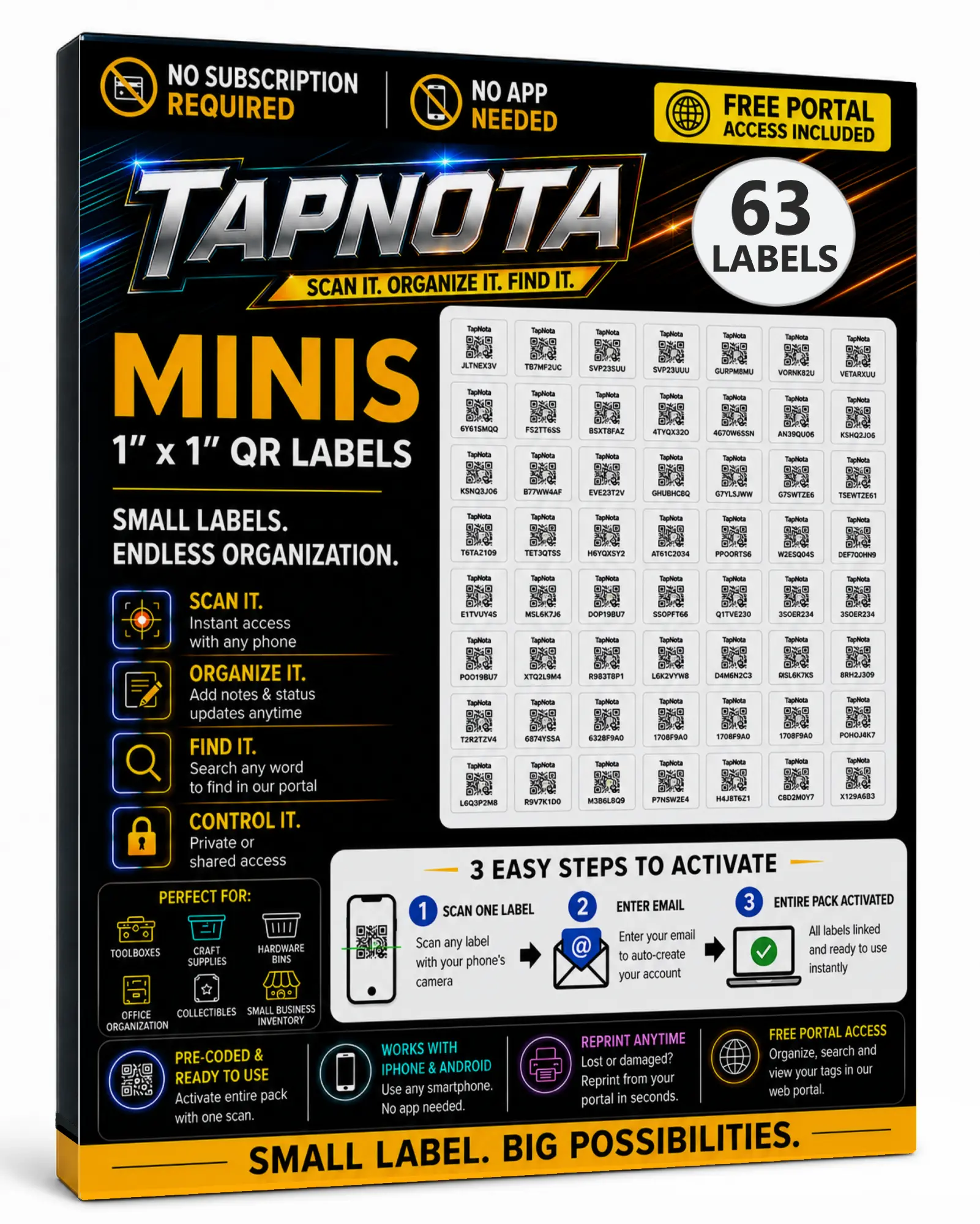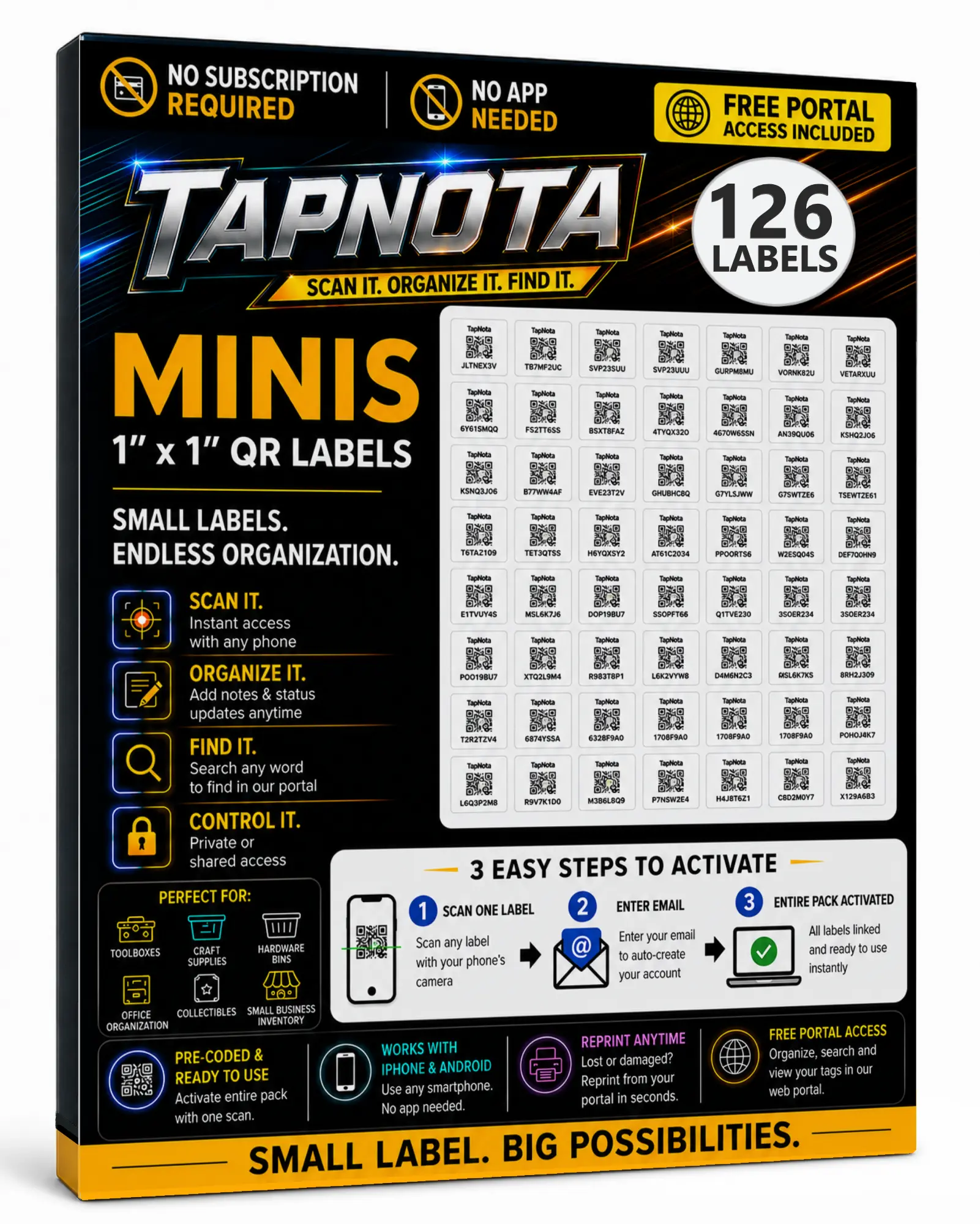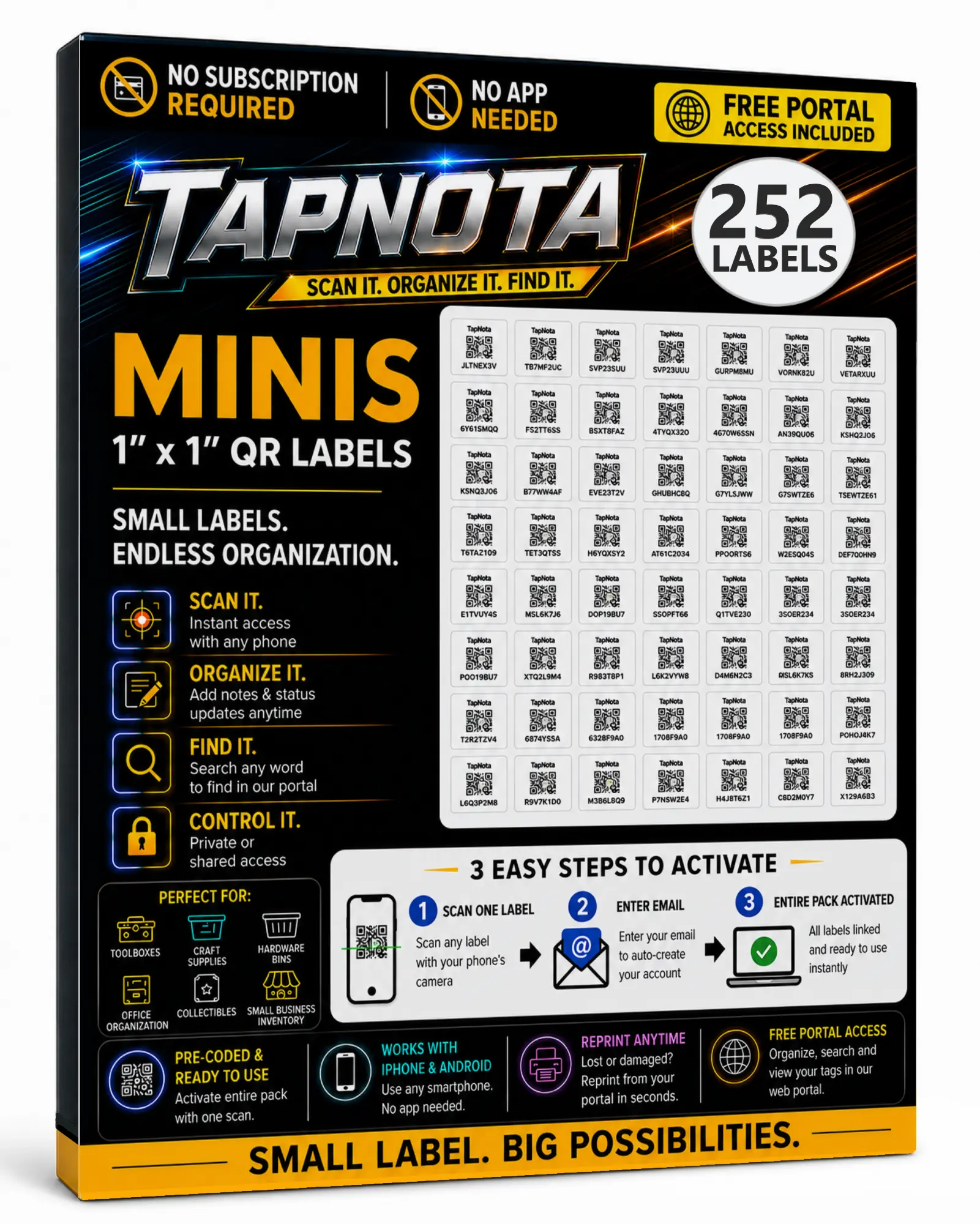
Activate the Entire Pack Once
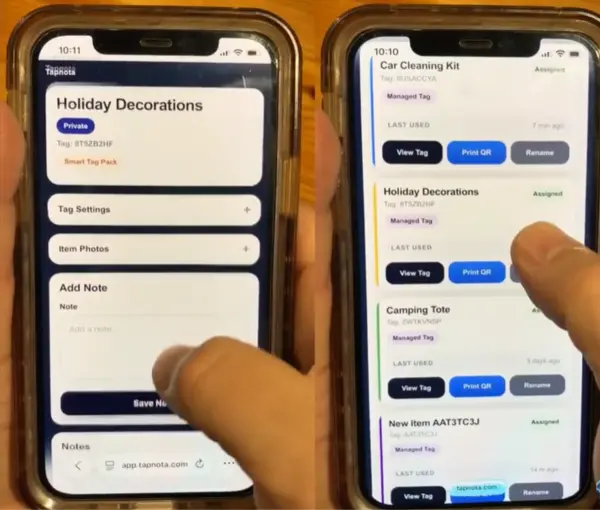
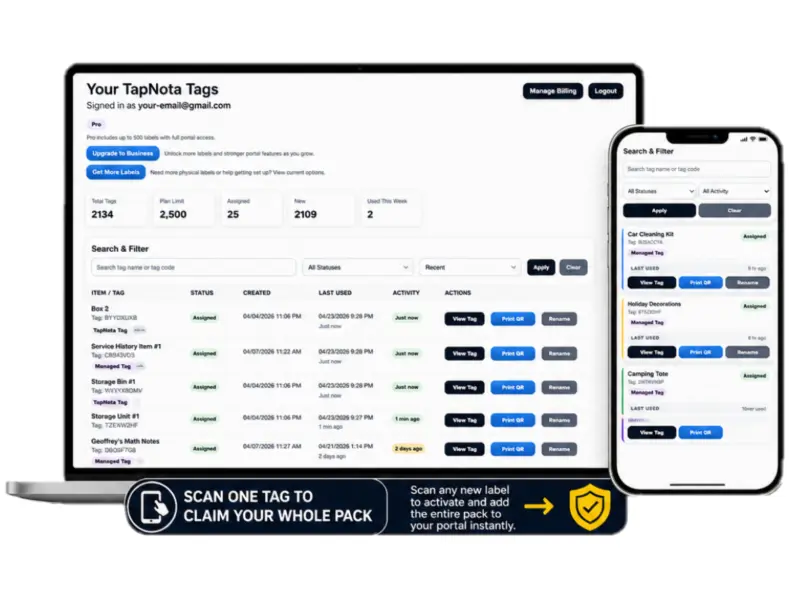
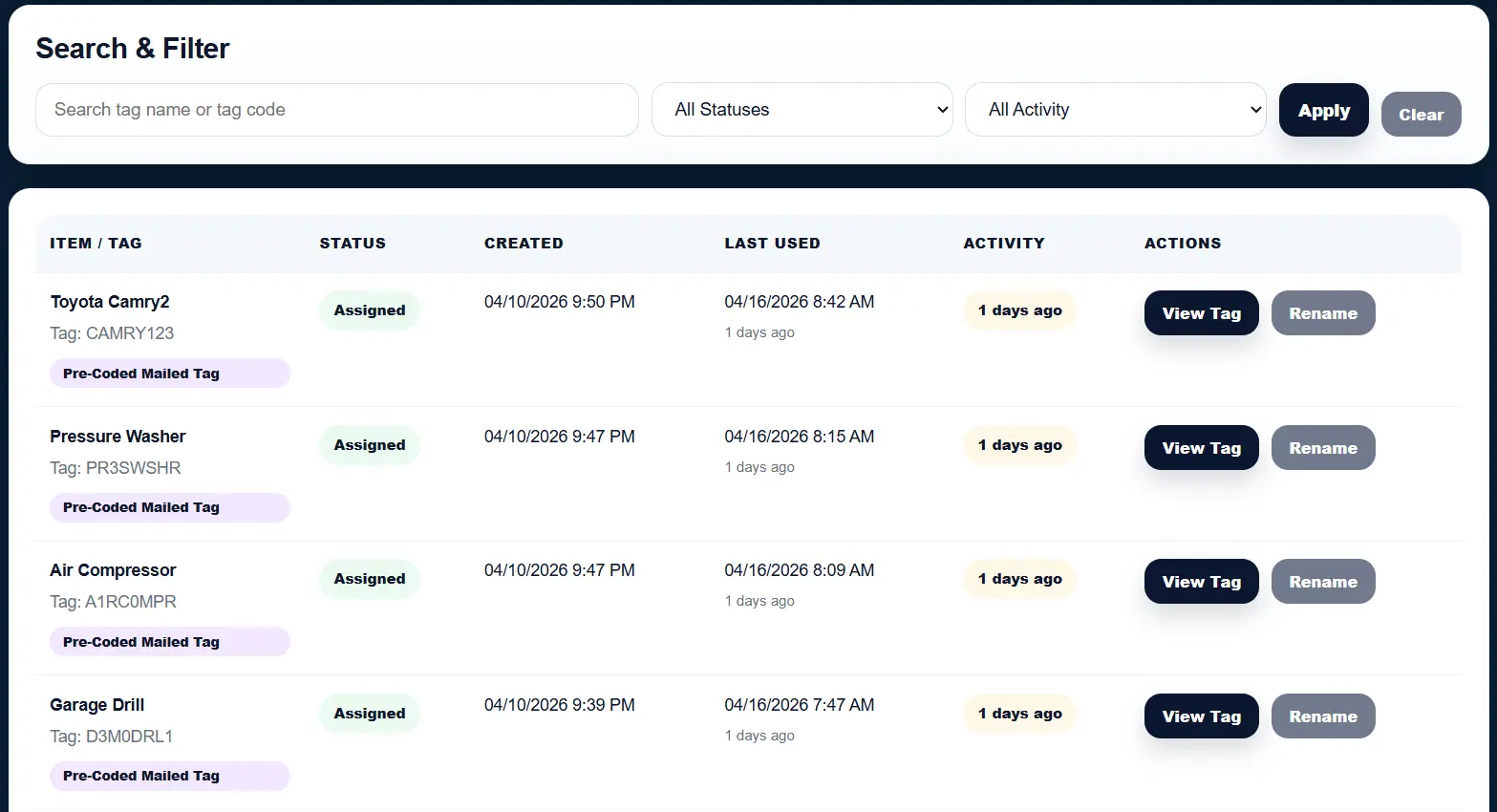
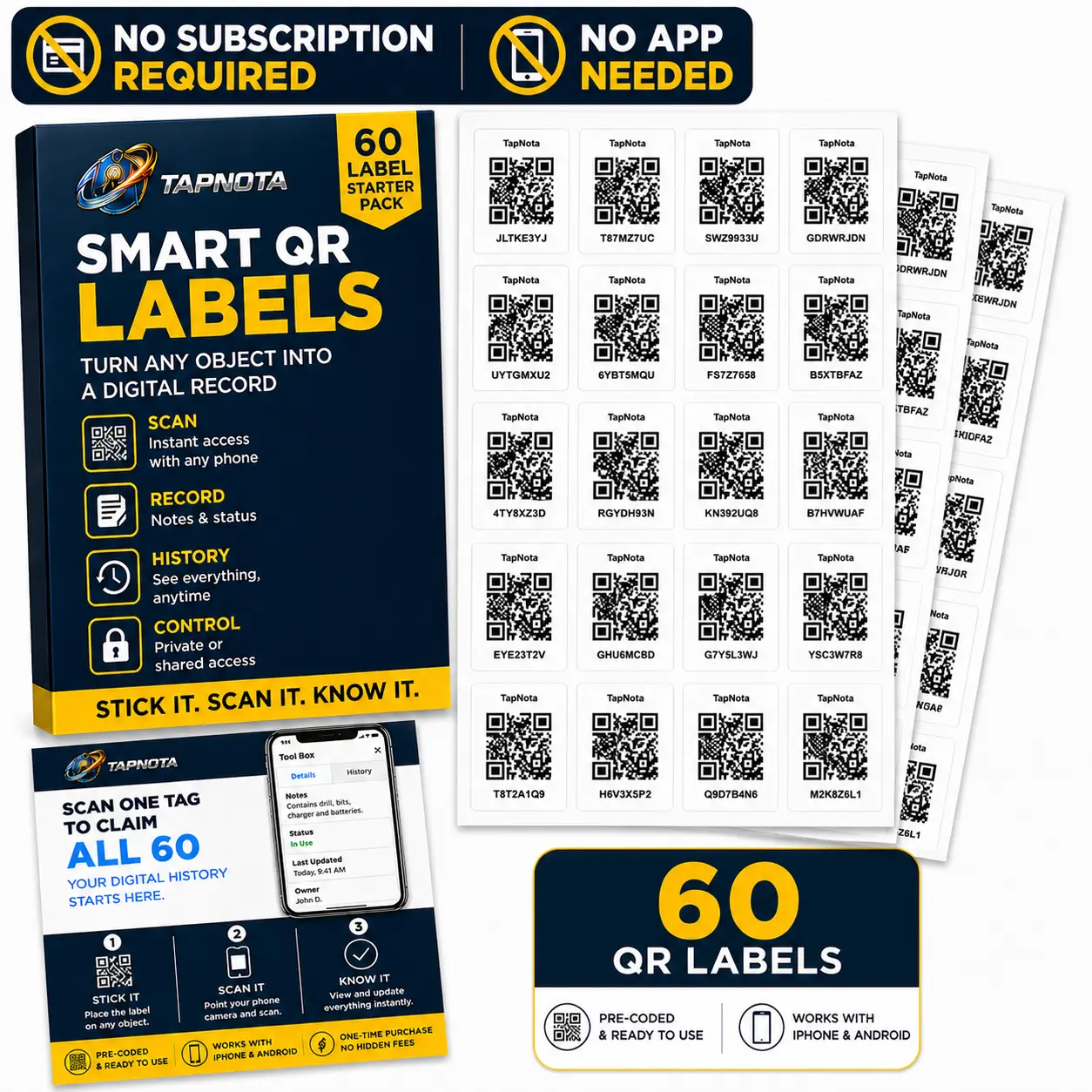
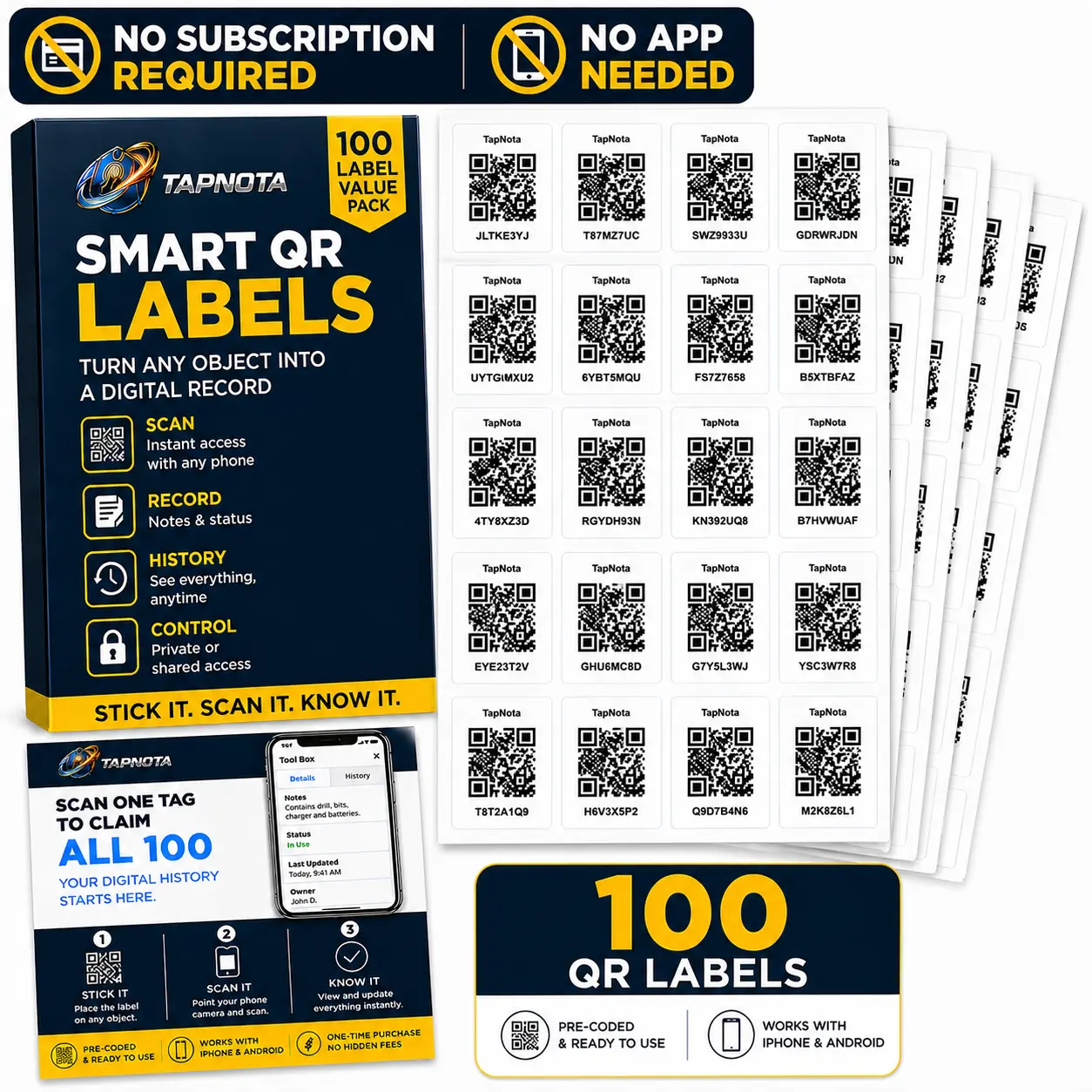
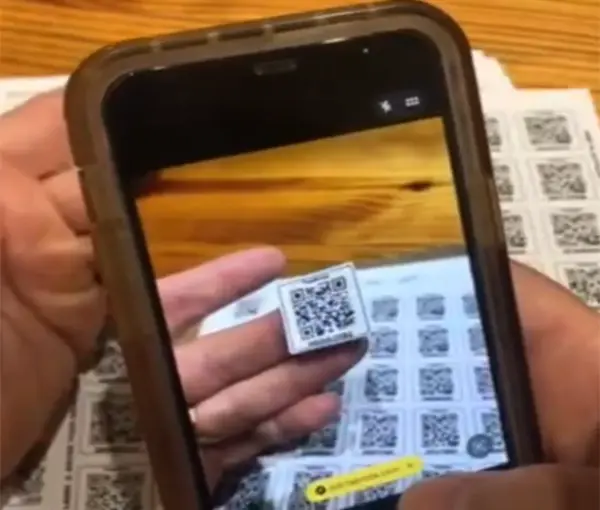
Scan any label in the purchased pack, enter and verify your email, and TapNota connects the whole pack to your account.
You do not activate every label separately.

Learn how to inventory your home without making the project overwhelming. Work room by room, record important details, add photos, track locations, and use TapNota QR labels to connect each belonging or storage bin to a searchable digital record.
Home Inventory Guide Image
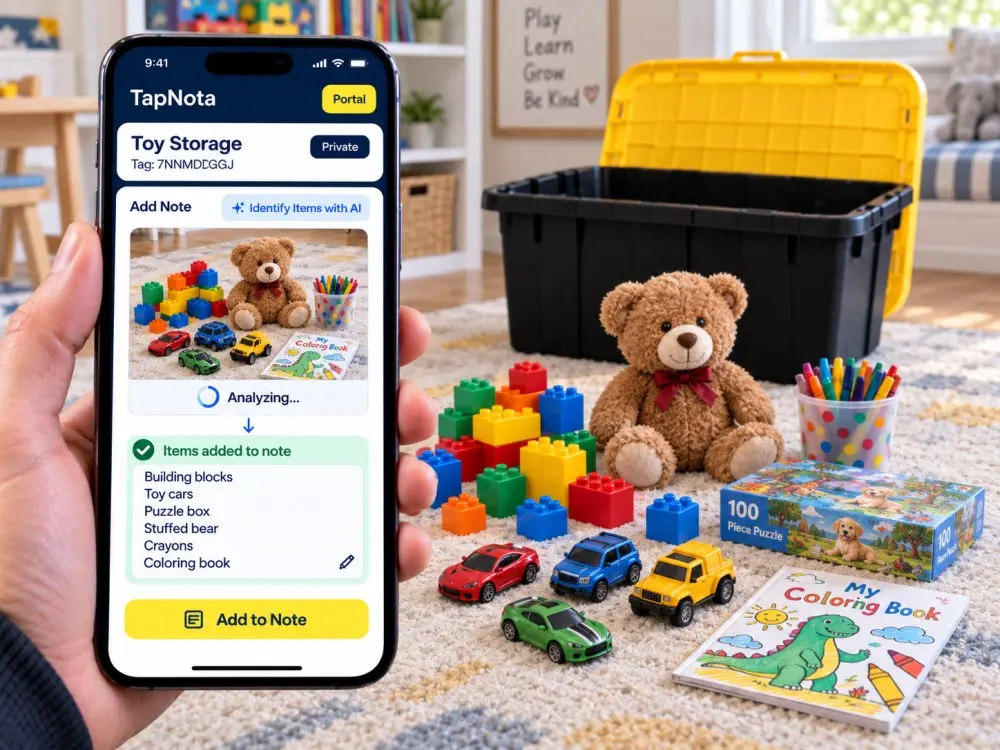
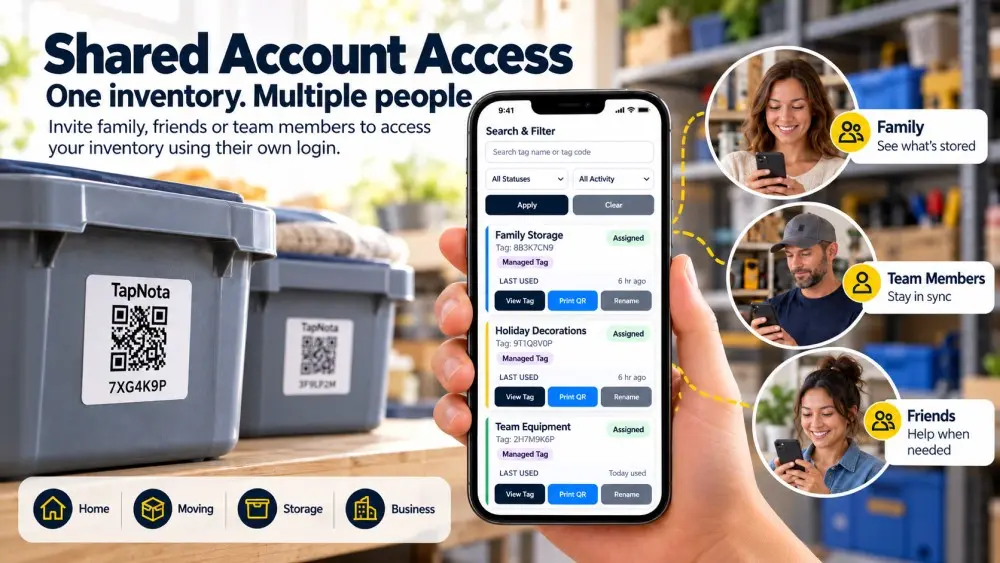
Add one lifestyle image showing household belongings, organized storage bins, and a phone displaying a TapNota item page.
A home inventory can help you organize belongings, locate stored items, record ownership details, document condition, and maintain useful information over time.
Record what is inside bins, boxes, closets, cabinets, attics, and garage storage areas.
Keep purchase notes, serial numbers, model information, warranties, and other identifying details.
Track repairs, maintenance, updates, condition, and changes to the item or its location.
Follow these steps to build a home inventory you can actually maintain.
Start with one room, closet, garage section, or storage area instead of attempting the entire house at once.
Begin with furniture, appliances, electronics, tools, valuables, and difficult-to-replace belongings.
Include names, descriptions, quantities, models, serial numbers, purchase information, and condition.
Photograph the item, identifying marks, accessories, labels, damage, or the contents of a connected container.
Note the room, cabinet, shelf, storage bin, closet, garage zone, or other current location.
Apply QR labels where useful and group related records by room, category, family member, or purpose.
You do not need every possible field for every item. Record the details that make the item easier to identify, locate, or maintain.
Use a specific name, category, quantity, color, size, brand, model, and other useful identifying information.
Record the room, closet, shelf, cabinet, storage bin, garage zone, or other place where the item is stored.
Add clear photos showing the item, current condition, accessories, identifying marks, or container contents.
Save purchase date, price, retailer, warranty notes, receipt information, and ownership history when useful.
Record serial numbers, model numbers, product IDs, and other unique identifiers for electronics, tools, and equipment.
Track repairs, maintenance, replacements, ownership changes, updates, and other important history.
Focus on major, valuable, difficult-to-replace, or frequently moved items first.
Major appliances, small appliances, cookware, specialty equipment, dining furniture, and valuable serving pieces.
Furniture, televisions, media equipment, speakers, artwork, collectibles, and smart-home devices.
Furniture, electronics, jewelry, clothing collections, accessories, keepsakes, and valuable personal belongings.
Computers, monitors, printers, external drives, office equipment, business assets, and important files.
Power tools, hand tools, lawn equipment, automotive supplies, sports gear, hardware, and spare parts.
Storage-bin contents, holiday decorations, seasonal clothing, camping gear, family keepsakes, and archived supplies.
A paper list or spreadsheet can help you begin. TapNota keeps the record connected to the physical item through a QR label.
| Feature | Paper List or Spreadsheet | TapNota Home Inventory |
|---|---|---|
| Create item records | Enter information into a separate document | Create a dedicated digital item page |
| Connect record to item | Record remains separate from the item | Scan the QR label to open the record |
| Add photos | Store separately or embed manually | Upload photos directly to the item page |
| Track locations | Edit rows or handwritten notes | Update the item location anytime |
| Search belongings | Search the document | Search the TapNota portal |
| Share selected records | Share the whole file or create copies | Share individual item pages |
| Replace a damaged label | Create another label manually | Reprint the existing QR code |
A useful inventory built gradually is better than a perfect system you never finish.
TapNota Product Image
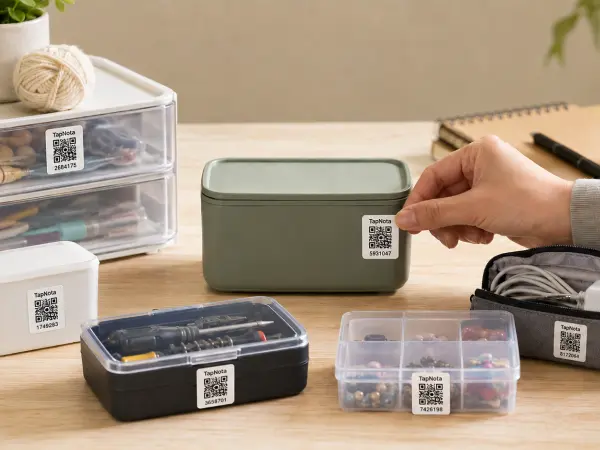
Add one product image showing TapNota label packs with labels applied to household belongings, tools, and storage bins.
Use original 2-inch TapNota labels for bins, appliances, equipment, and larger belongings, or TapNota Minis for tools, electronics, drawers, and smaller household items.
Explore related TapNota pages for checklists, digital inventory, storage organization, and QR labels.
Record the belongings that matter, add useful details, and use TapNota QR labels to keep each digital record connected to the physical item.
Need more labels? Buy additional TapNota pre-coded packs on Amazon. Scan one label to activate your entire pack instantly.